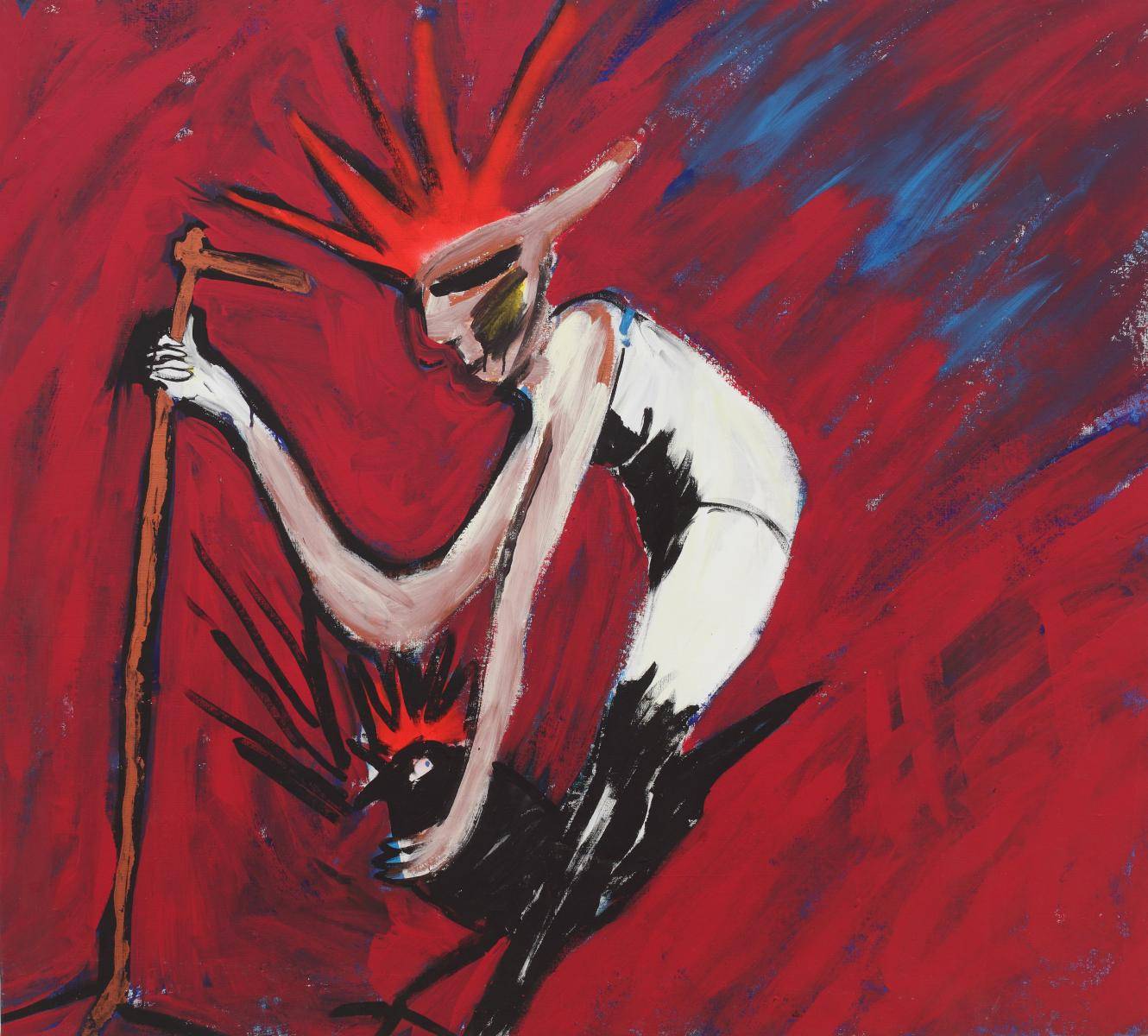

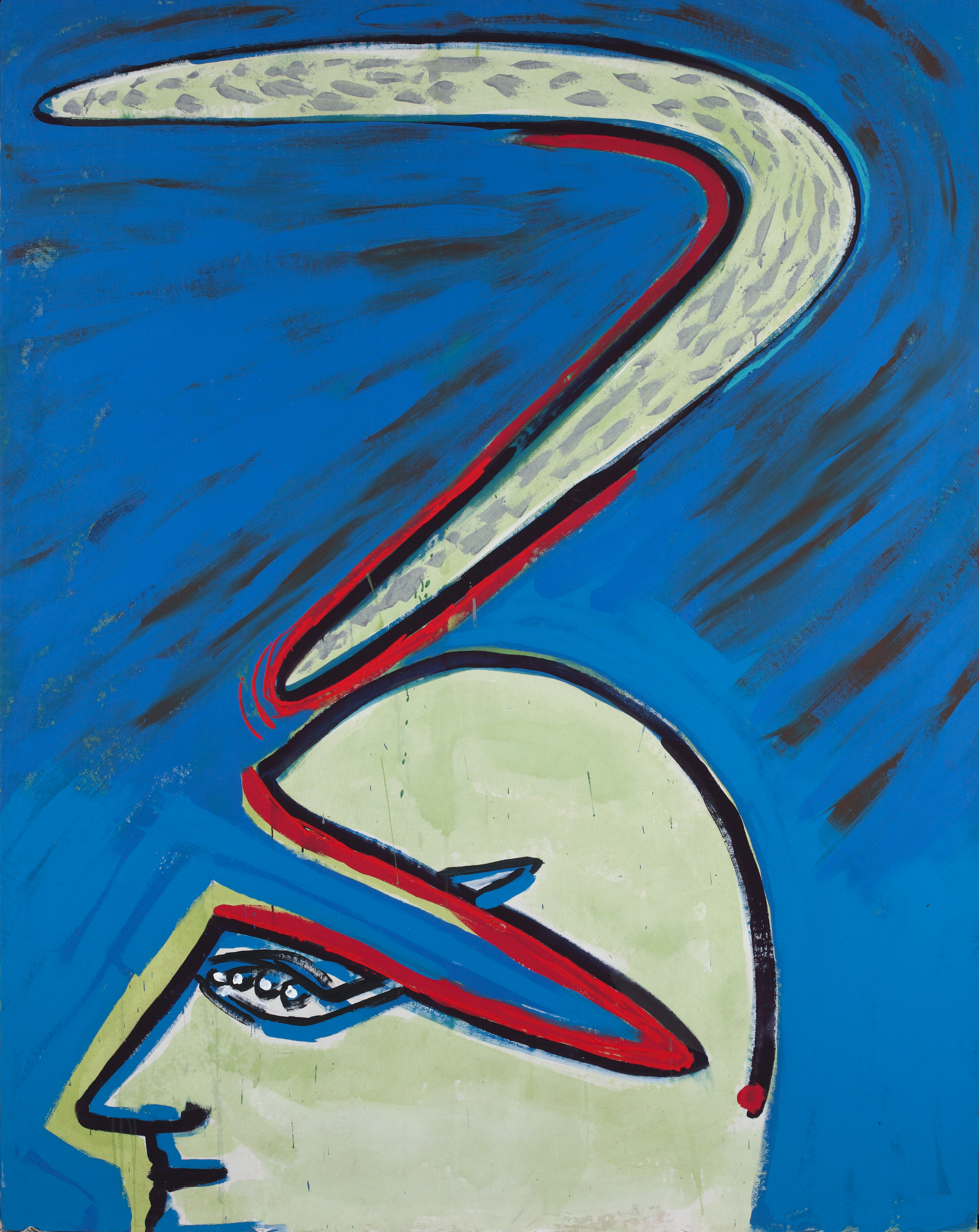
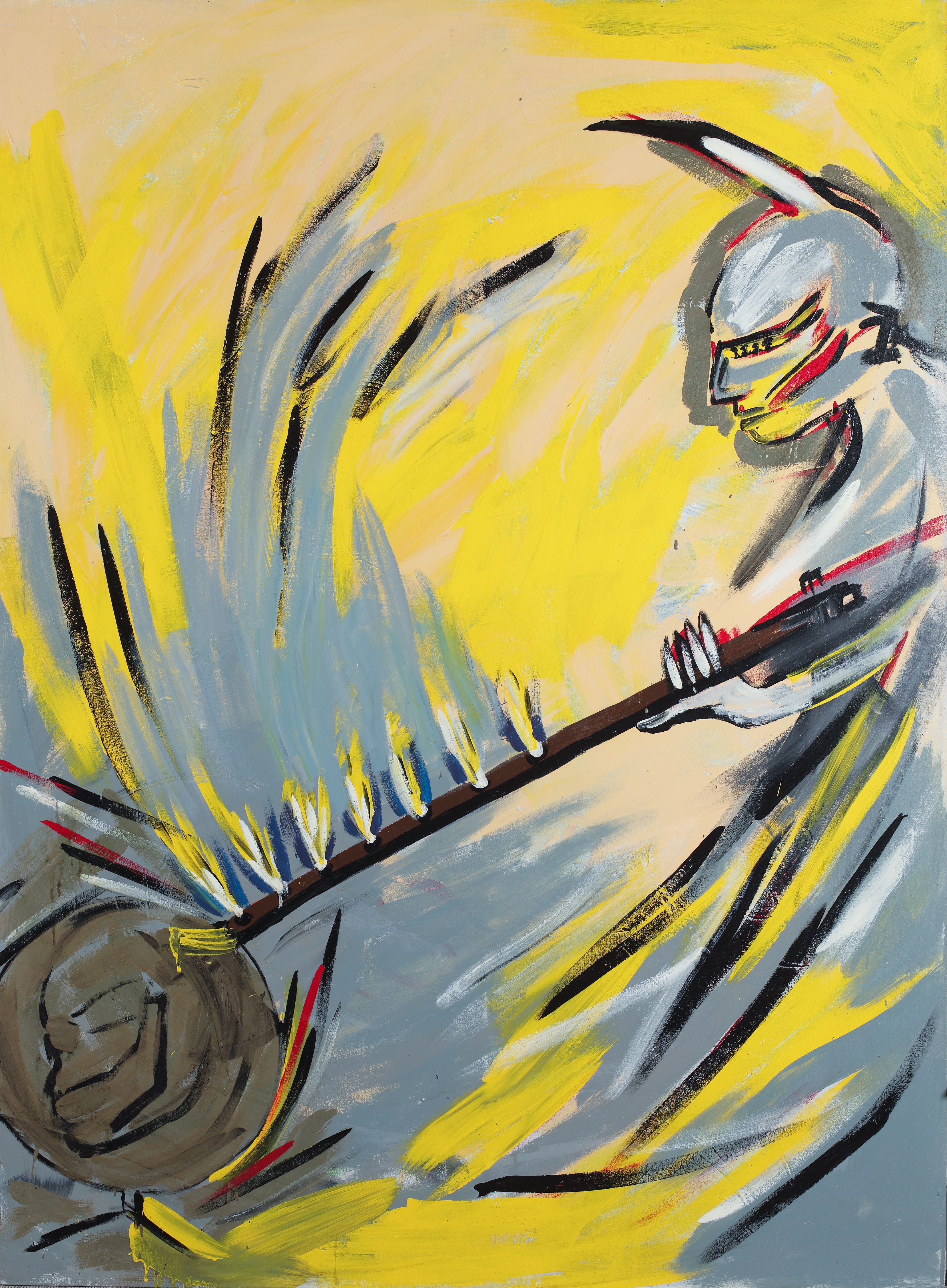
In 2026, Berit Heggenhougen-Jensen turns 70. Kunsten marks the occasion with the largest museum exhibition of her work to date, offering an in‑depth insight into the artist’s works from primarily the 1980s and 1990s – a period characterised by defiant energy and untamed wildness on the canvas.
The exhibition is based on Kunsten’s own collection, which includes 64 works by Berit Heggenhougen-Jensen, and is accompanied by a richly illustrated catalogue that helps cement Heggenhougen-Jensen’s position as one of the most significant artists of her generation.
Knife to the Head
Berit Heggenhougen-Jensen had her breakthrough in 1982 with the legendary exhibition Kniven på hovedet (Knife to the Head), where the group De Unge Vilde (The Wild Youth) made their entrance. Here, painting was reintroduced with full force – raw, direct, and bursting with energy. This marked the beginning of a long and persistent artistic journey, in which she has continually pursued new expressions and new motifs.
Kniven på hovedet consisted of 12 young students from the Royal Danish Academy of Fine Arts. They had been raised on the conceptual art and minimalism of the 1960s and 70s, but found a clear counterpoint in the new expressive painting emerging among young artists in Germany. The punk‑inspired, primitivist and semi‑figurative works, executed in primary colours and large formats, drew on everything that preoccupied them – without fixed boundaries for subject matter or expression.
About the artist
For Berit Heggenhougen-Jensen, the period of Kniven på hovedet and De Unge Vilde marked the beginning of an impressive and experimental artistic practice.
Already in the early 1980s, she began working with the landscape – a genre to which she would continue to return, either as an independent subject or as a component of her works when, in the 1990s, she explored themes such as feminism, gender, and sexuality. Often this took the form of collages, in which she inserted foreign elements into her canvases, including cut‑out pin‑up models, vinyl records, and condoms.
Here, too, humour and a certain ironic distance play a role, evident for instance in work titles such as Frøken Jensens Gastronomiske Indetermination (Miss Jensen’s Gastronomic Indetermination) and Schlager, referencing the sweet and sentimental pop hits of the music world.
Supported by