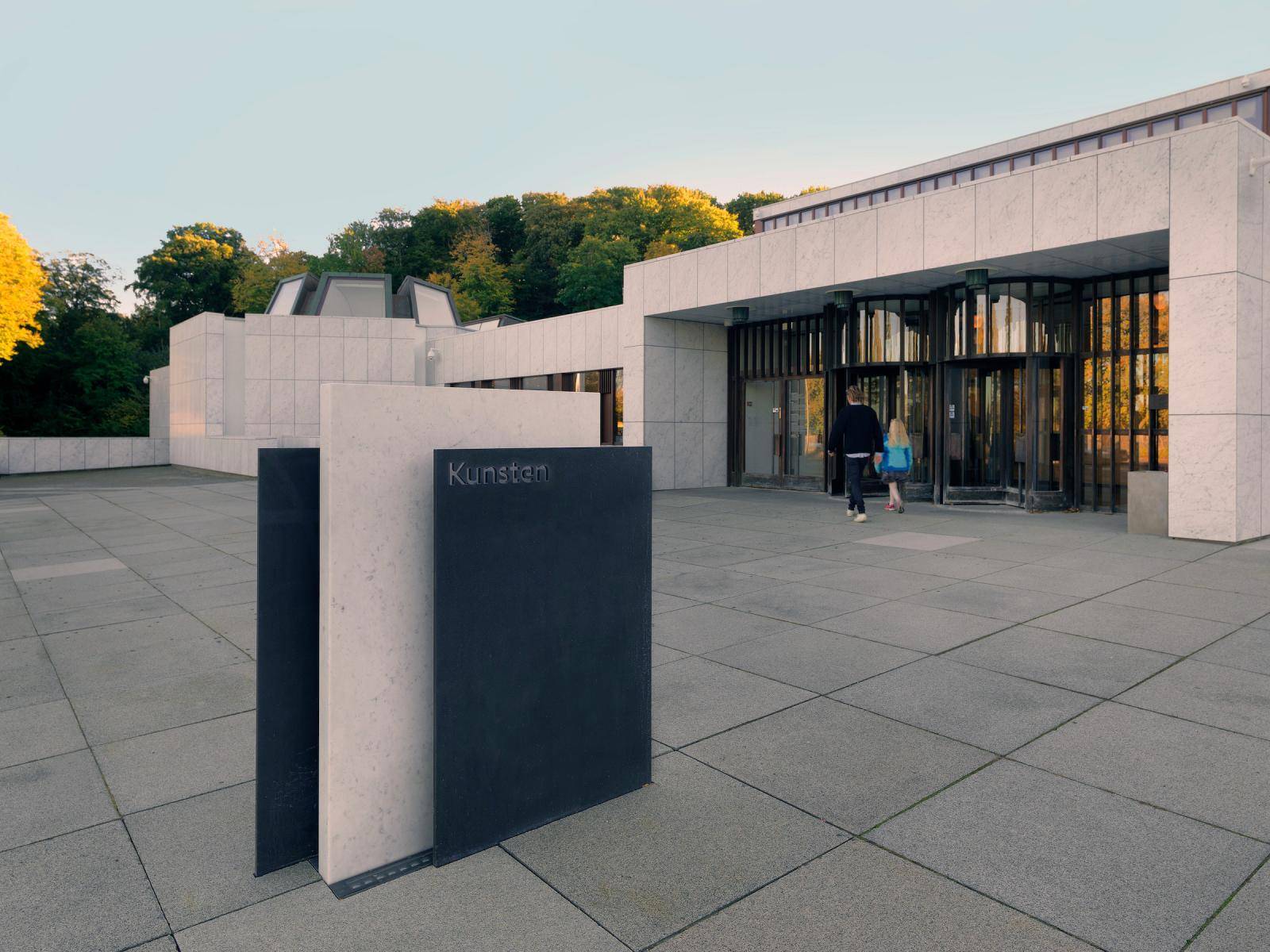
In 1972, Kunsten Museum of Modern Art, as we know it today, opened on Kong Christians Allé. After almost 40 years, the dream of a new Museum building had finally come true.
In 1958 an architectural competition had been organised to design what was then called Nordjyllands Kunstmuseum (North Jutland Museum of Art). This signalled the start of a new era in the old industrial city of Aalborg. Now it was time to give culture a chance!
Sensational Proposal from Finland
One of the competition proposals in the bidding round came from Finland. It caused something of a sensation. Who would have thought it? A city like Aalborg had gained the attention of a world-famous master architect from Finland! Alvar Aalto won the competition in collaboration with his wife, Elissa Aalto and the Danish architect, Jean-Jacques Baruël, who at the time was working in Alvar Aalto’s practice. By choosing Aalto’s proposal, the committee were particularly drawn to the building’s interaction with the surroundings and the window sections, which would offer views of the surrounding park in the old gravel pit.
Flexibility and Clarity
The Museum was built between 1969 and 1972 in white marble with details in redwood and ash, copper and brass. It had a layout that made it easy for guests of all ages to find their way around. One of Aalto’s overriding ideas was for the building to be extremely flexible. The moveable wall partitions would make it easy to change the size and order of the rooms as required.
The Museum Building Today
Today, at street level the Museum features a foyer, a Museum shop and a library, and two open exhibition areas and two galleries. At Sculpture Park level there are the Museum’s café, the new exhibition gallery (that opened in 2016), an auditorium, the cloakroom, a library, offices, storage rooms and a workshop. The Museum covers a total area of about 6000 m2, including exhibition space of about 2500 m2.
Alvar Aalto’s Holistic Experience
Throughout his career Alvar Aalto fostered the concept of the Gesamtkunstwerk: a total work, in which architecture, design and art merge and are united in a whole work. This is very much evident in the building, which Aalto created for Kunsten.
Democratic Design Products
Aalto designed not only award-winning buildings, but also design products, which over the years have become classics. Despite the fact that his design products were often created for specific buildings, many of them are still manufactured and sold today. Whereas today Aalto’s buildings have exclusive international status, his furniture is ‘democratic’. Aalto’s aim was to create and mass-produce furniture for many people at reasonable prices.
Acclaimed Design
Aalto managed to be both exclusive and popular. Around the 1970s, Denmark was the Finnish architect’s major customer, so you are more than likely to have come across some of Aalto’s furniture in private homes. Aalto’s Paimio Chair and Savoy Vase (also known as the Aalto Vase) are particularly acclaimed throughout the world. Aalto’s design products are iconic and have been exhibited in some of the world’s major Museums, including the Museum of Modern Art in New York and the Museum für Gestaltung in Zurich.
Discover the Design in the Museum
In Kunsten you will find both design products that were created for the building and products that are, and were being mass-produced when the Museum came into existence. You can discover and try out many of them when you visit the Museum – everything from tables, chairs and lamps to smaller utility items such as vases, candlesticks and chopping boards. They all help underpin the holistic experience of the building, at which Aalto aimed in his work.

Architecture and Light
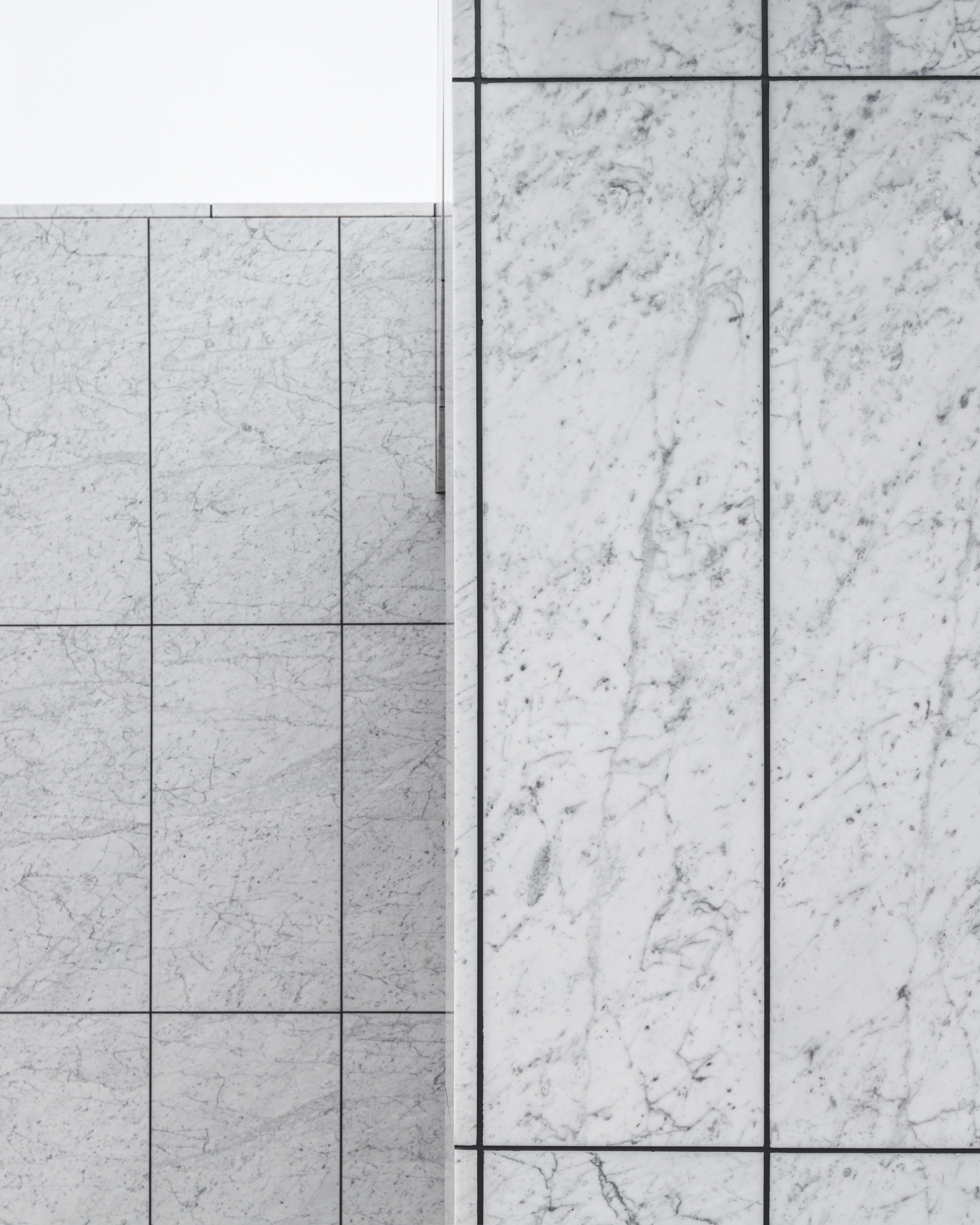
In 1972, the new art museum, provided North Jutland not only with a new building but also with a piece of world-class architecture, in which light plays a very special role.
Light at the Centre
One of the features, for which the Museum is famous, is the dramatic way in which light enters the building. Aalto paid great attention to daylight and the way it was reflected down onto the artworks via windows and skylights.
“What acoustics are to a concert hall, light is for an art museum.” Such was the heading the three architects gave to their proposal, which in 1958 won them the task of designing the Museum. Entering the Museum, you immediately discover how light interacts with the artworks, the interior, the décor and the environment outside.
Natural Light in the Galleries
Wherever possible, the exhibition galleries in the Museum are illuminated by natural light: indirect light – so the direct UV rays do not harm the artworks. The entire building is constructed to ensure the gentle dispersion of light. Try looking up in the galleries with skylights and see how the daylight is drawn in through the skylights, framing the curved ceiling structures to prevent sharp, direct light from hitting the artworks.
Artificial Light as a Supplement
The daylight is supplemented by artificial light sources, for both sensory and simply practical reasons. It should also be possible to enjoy the artworks on a dark November day. But the artificial light sources do more than simply light up dark spaces. They are located with the greatest precision, so they also make the natural light more diffuse when it enters the space.
Interior Details Support Light
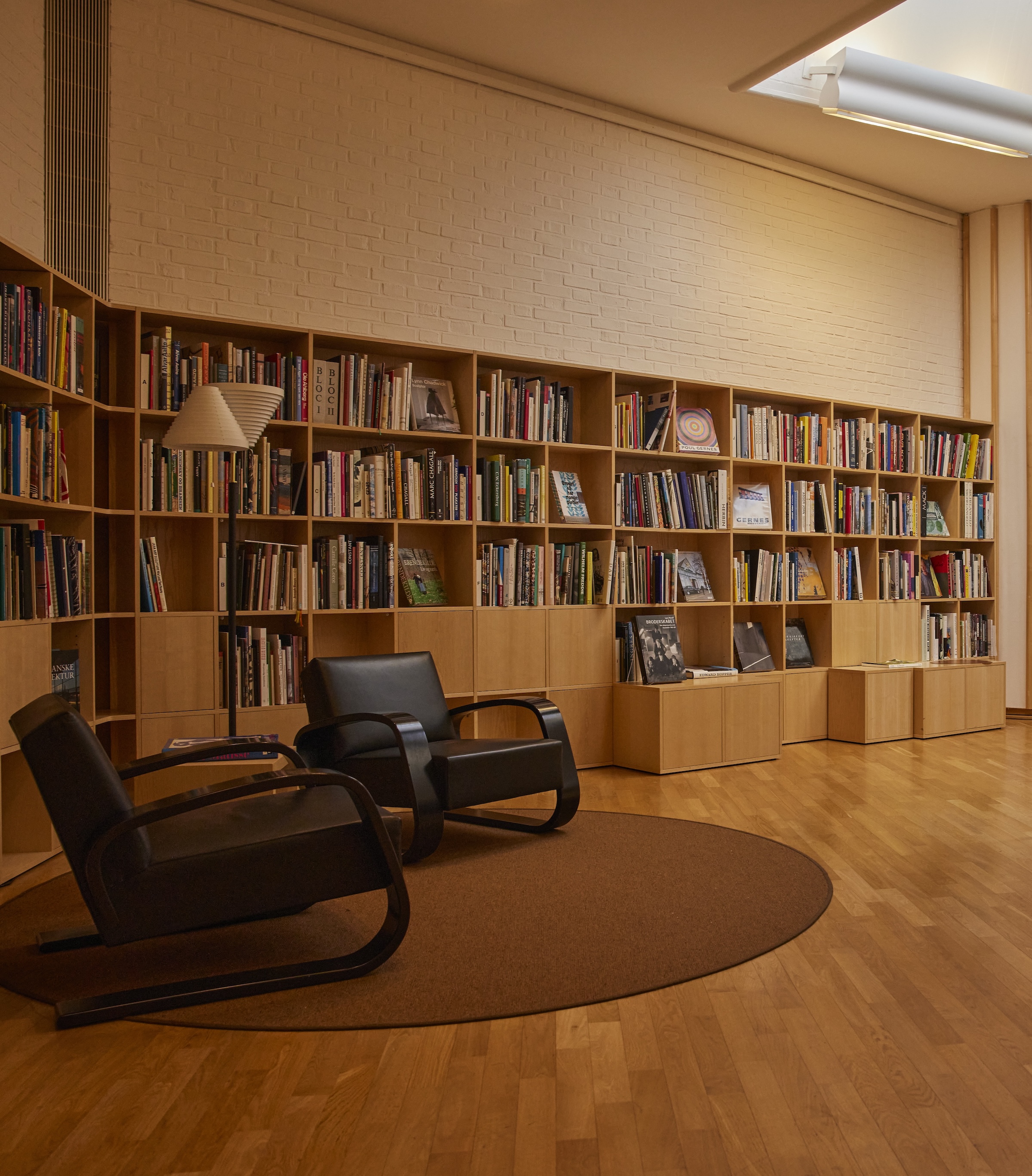
All interior details and all materials in Kunsten were selected to underpin light. Note, for example, how the light is reflected in the polished marble surfaces of the floors. The Museum’s lamps were also designed by Aalto or Baruël. The lamps are stylistically very diverse, but all were designed to emit a diffuse, gentle light. An excellent example is the standard lamp in the Library, which releases diffuse light through its white slats.
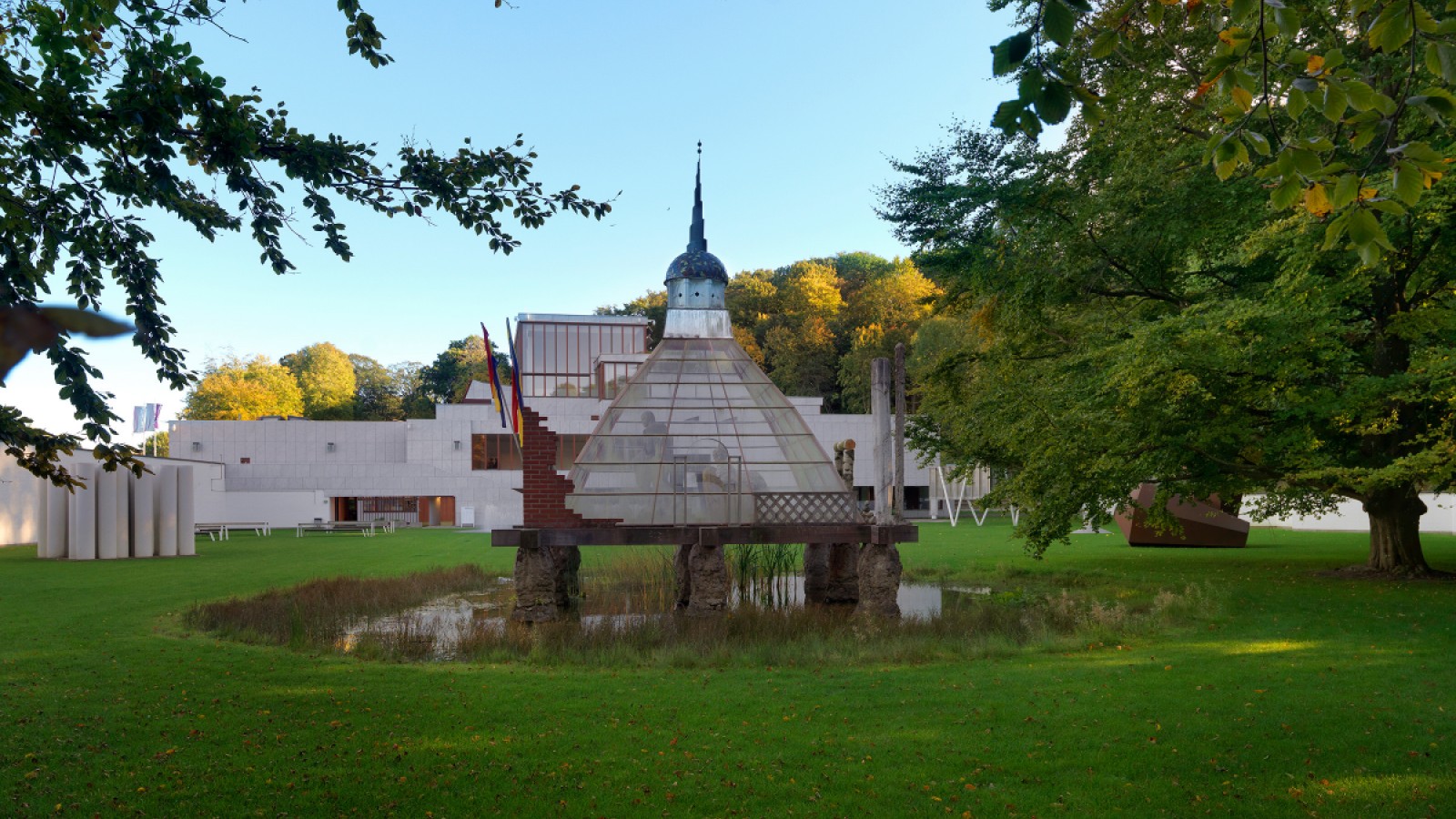
The Sculpture Park
Like the actual Museum, Kunsten’s Sculpture Park was designed by Alvar Aalto. As you will soon discover, there is a common thread uniting Aalto’s architecture and interior design and the Sculpture Park outside.
The Library
The Library was conceived as a ‘space for contemplation’ and is generally referred to as the most anti-social room in Kunsten. The room is designed for people to sit and read books from the Museum or to watch a film. Whereas everywhere else in the Museum people walk around chatting about what they are experiencing, in the Library a very special peace reigns.
The Library at Kunsten is the largest art library outside Copenhagen. The Library contains press cuttings and an extensive selection of books about art, and art books that relate to what visitors see in the exhibitions. The Library also features books, which are small works of art in their own right and published in limited editions.
Aalto Showroom
Alvar Aalto designed the gallery as an irregular polygon with a unique concrete structure and four fan-shaped skylight windows. So the light enters the gallery from a window at the top – from which there is a little glimpse of the long marble wall. Throughout the years the gallery has served as an ‘Aalto Showroom’, all its furniture and lamps having been designed by Alvar Aalto.
From Music Room to Library
The room has been through many phases before arriving at its present state. Originally it was created as a chamber music room, and for the sake of acoustics it had parquet flooring, and the walls were covered with curtains manufactured according to the architects’ designs. Later the room was converted to a museum of children’s art, then a cinema, later to an Art Lab and now a library.
The 5 Galleries
According to Alvar Aalto’s original designs for the Museum, the upper floor was intended to contain all the galleries. Today there are 5 individual galleries in Kunsten, four aboveground and one under.
According to Alvar Aalto’s original designs for the Museum, the upper floor was intended to contain all the galleries. Today there are 5 individual galleries in Kunsten, four aboveground and one under.
In Kunsten, the inner flow, and accordingly the movement of visitors, proceeds in a circle around the high-ceilinged central gallery, the Main Gallery in the centre of the Museum and on to the Sky-lit Galleries and the Side-lit Galleries, exactly as Alvar Aalto had envisaged back in the 1960s.
Originally there were only four galleries – but the restoration of the Museum in 2014-2016 involved the addition of an exhibition space on the lower floor, the New Gallery. This created an even better flow through the floors of the building, so that the café, workshops and exhibition galleries became even more closely connected.
Most of the Museum’s galleries are named after the way that light functions in them. The light is significantly different from gallery to gallery, varying according to the position of the windows, the points of the compass and the season.
Read more about the individual galleries below.
Small Gallery
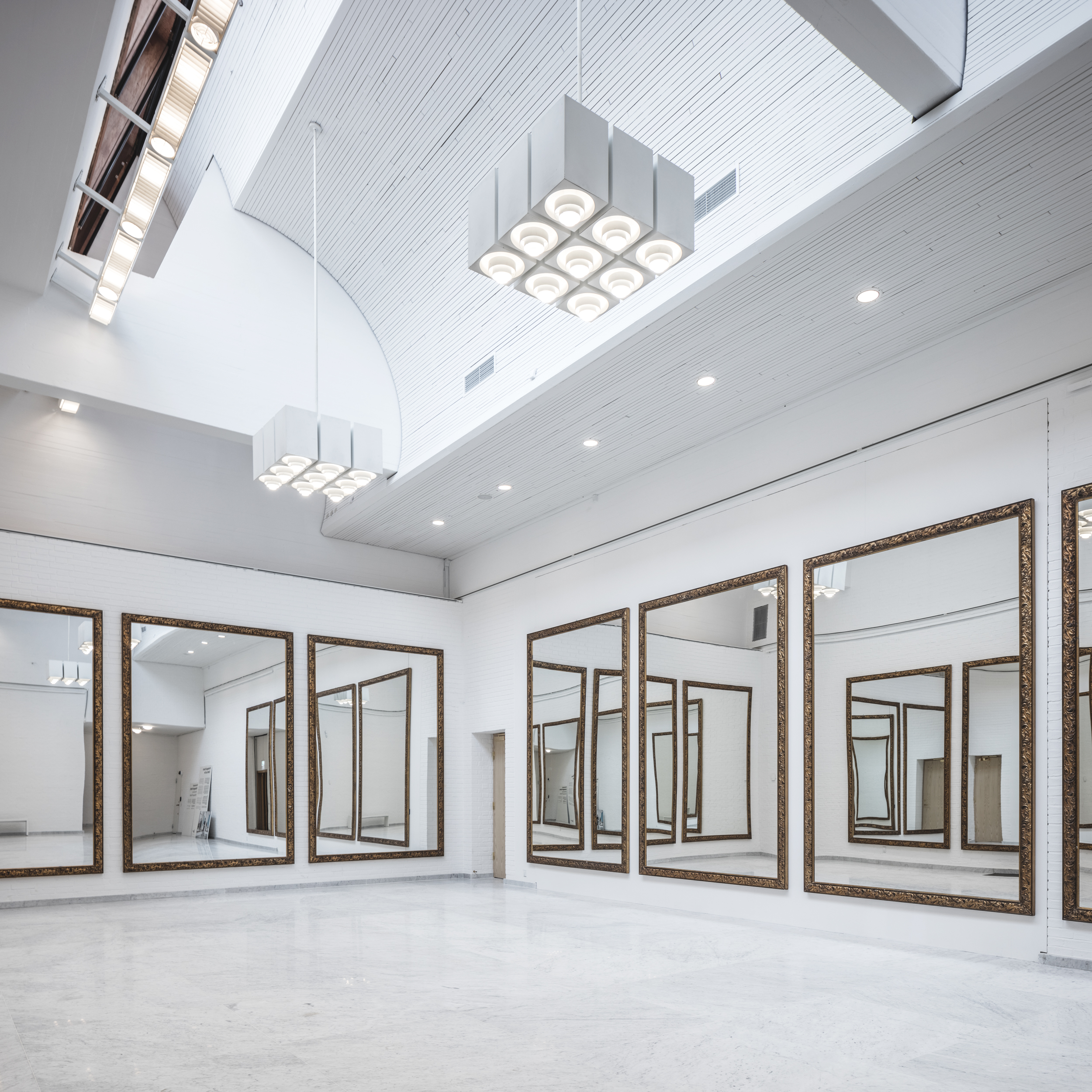
This gallery was originally called ‘The Sculpture Gallery’, because it was intended for the presentation of sculptures. When the Museum was designed, sculptures were one of the particularly important forms of expression! All windows in the Small Gallery are north facing, so no direct sunlight enters the gallery. On days with cloudy weather the light feels colder and bluer in there, making the space particularly suitable for the display of sculptures.
Today the gallery is used for all kinds of exhibitions: for example, the current mirror installation by Michelangelo Pistoletto, Eleven Less One, which has gone on to become a permanent work in the gallery.
At the back of the Small Gallery there is a large sliding door that can be pulled to one side to create an open connection to the Main Gallery. This allows interaction between the two galleries and provides space for even bigger exhibitions.
New Gallery
Prior to the restoration of Kunsten in 2014-2016 it was apparent that a new gallery was sorely needed: a flexible space with a high level of security in terms of theft, light and climate. The New Gallery was completed in 2016 in the ‘belly’ of the Museum and now encompasses everything the Museum and visitors wanted.
This gallery guarantees maximum attention on the exhibition, allowing it to be ‘the only star’. The light can be controlled to support a particular ambience or scenography. The gallery can also be blacked out entirely for the likes of video installations, which require a completely or partially dark room. In addition, because it is possible to keep out the light completely, the New Gallery is also ideal for the exhibition of light-sensitive works: for example, paper works.
The gallery is extremely flexible. Walls can be built wherever required without the limitation of architecture and the architectural lines of the building. The New Gallery has a concrete floor, which means that very heavy objects can be moved into the gallery, if required.
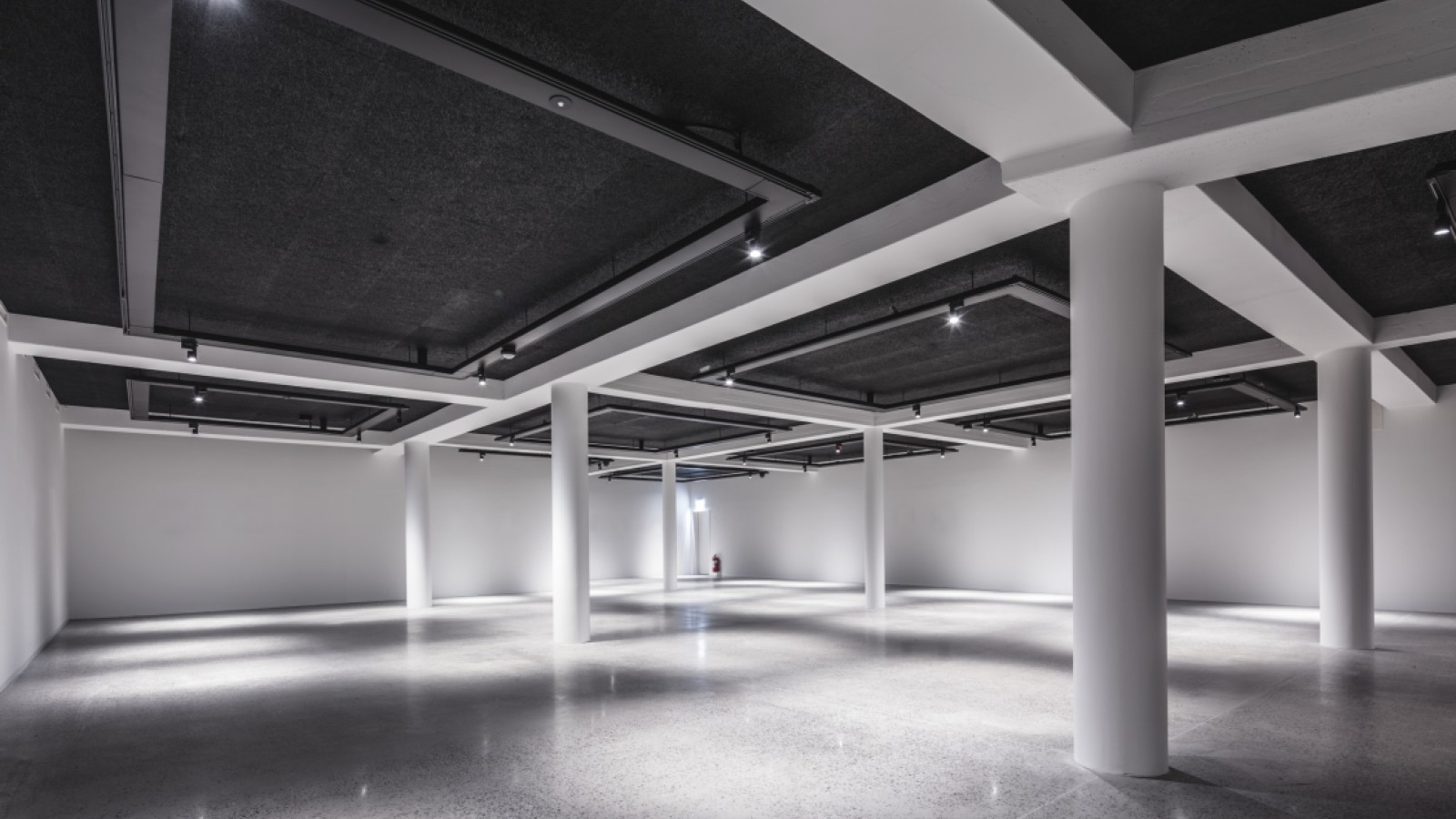
The Sky-lit Galleries
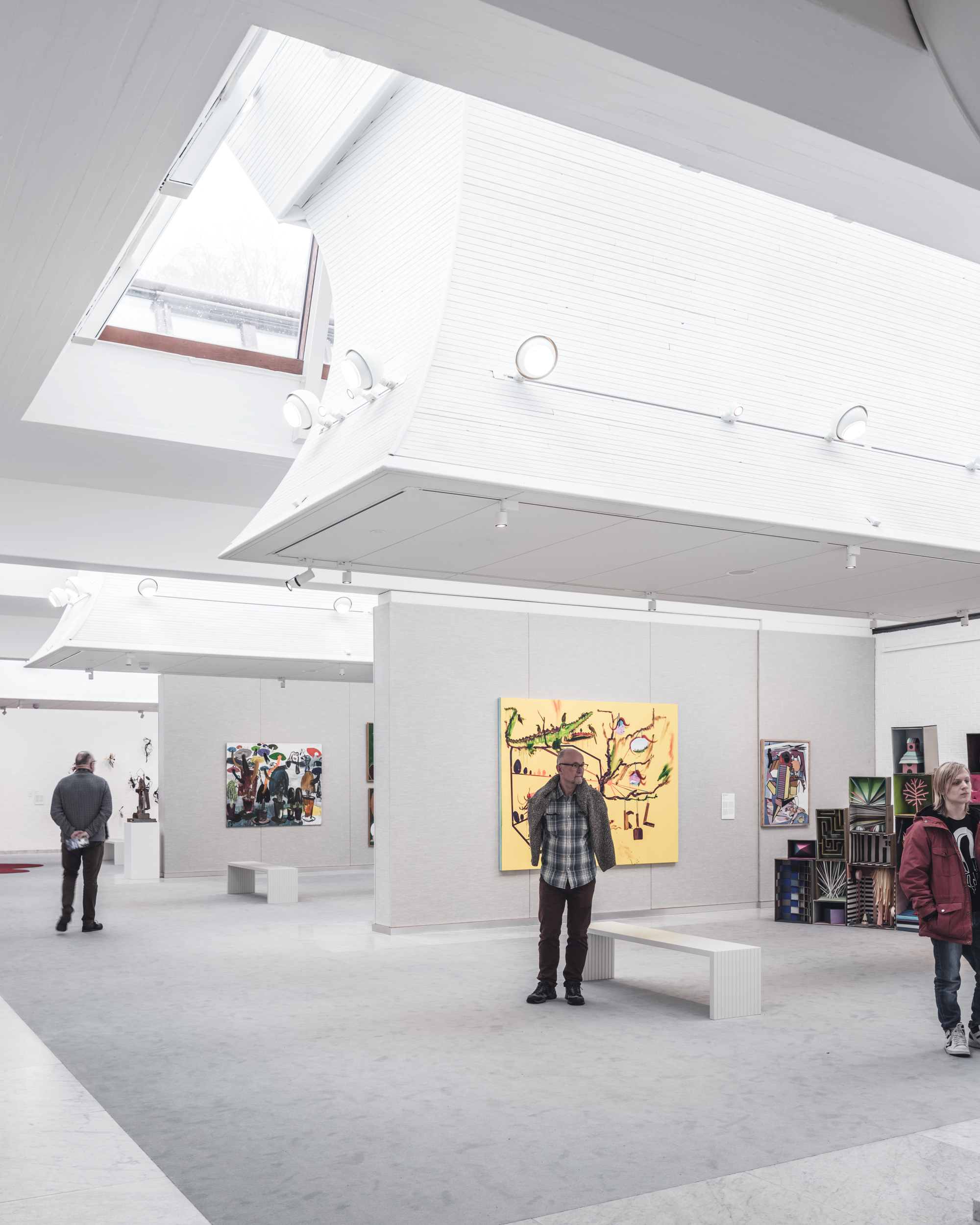
Here the light enters exclusively from above. Currently a maze of works occupies most of the space. Without this, it would be a single large open space. The Sky-lit Galleries are a typical feature of Modernist architecture. The pillars and surfaces in shades of white generate a sense of floating. They intersect, making the space light and vibrant.
The Sky-lit Galleries provide an extremely flexible exhibition area. There is the option of placing partitions here and there. Generally speaking, the Sky-lit Galleries are used for hanging Kunsten’s permanent works, but there is also space for temporary exhibitions. The idea behind the maze, which currently features in the Sky-lit Galleries, is to embrace the many different works and periods in Kunsten’s collections – Cobra art, 1930s Surrealist art, Pop Art, Danish contemporary art and international art – and to give a sense of exploring the collection.
The maze also features two activity spaces for children, where children can draw on the walls in Cobra style. The other space contains various shapes that can be assembled into sculptures: inspired by the works of Robert Jakobsen, for example.
The spaces are for families with children, for the delight of children who love hands-on activities. Another positive result of the activity spaces is that people are encouraged to discuss the art they see. The small spaces are perfect for conversation; the intimacy allows people to open their mouths without worrying about disturbing others.
The Side-lit Galleries
The Side-lit Galleries are seven ‘intimate’ galleries, where the light enters from the side, and from which there is a view of the woods and the amphitheatre. That means visitors can enjoy an experience of nature while looking at art. This was also the concept of the entire building: a dialogue and interaction between architecture and nature. Walk around in the Side-lit Galleries and you will get a perfect impression of this effect.
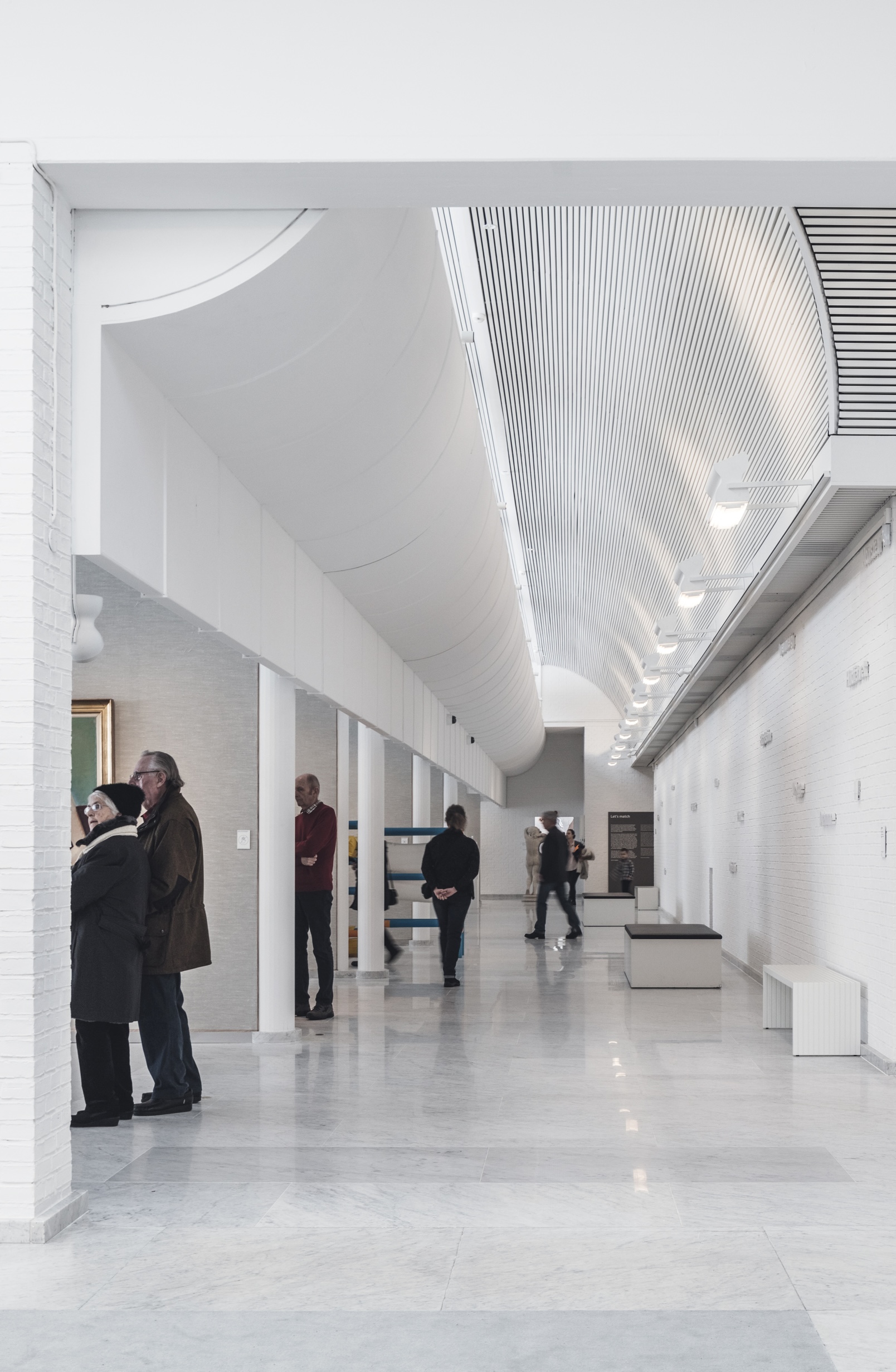
Main Gallery
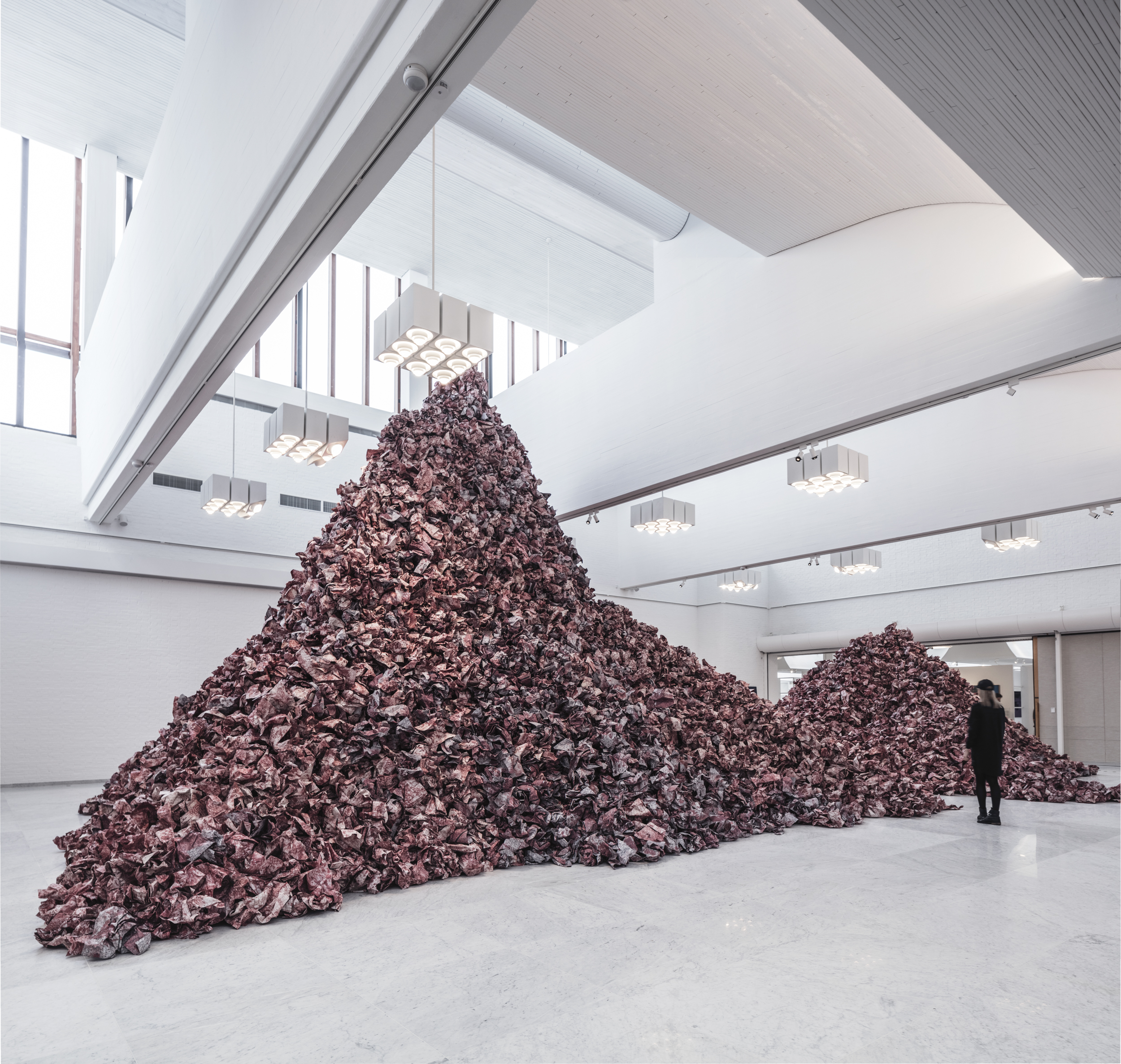
The central idea of the Museum’s entire architecture is for visitors to head for the Main Gallery – formerly known as the Central Gallery. When you enter the Museum through the dark doors and entrance area, the Museum is relatively dark. But as you move around the building, light plays an increasingly more significant role. Even in the foyer there is more light, and it increases gradually as you move through the Side-lit Galleries and the Sky-lit Galleries and into the Main Gallery with its high ceiling and great openness. The Main Gallery is a perfect example of how Aalto worked with light. Remember to look up!
Two changes have been made to the Main Gallery since 2007. On one hand, improvements were made in terms of security; on the other hand, there have been visual upgrades. Following the restoration, the marble was polished, new hessian was attached to the walls, and the gallery was painted.
The Main Gallery is chiefly used for temporary exhibitions. Many artists fall for the Main Gallery and want to exhibit there because of the light and the size of the space.
Fun fact:
Near the door, through which you enter from the foyer before turning round the corner, there are three holes in the wall. Behind the three small holes there is a projector room. The original plan involved being able to screen films in the Main Gallery.
The Restoration 2014-2016
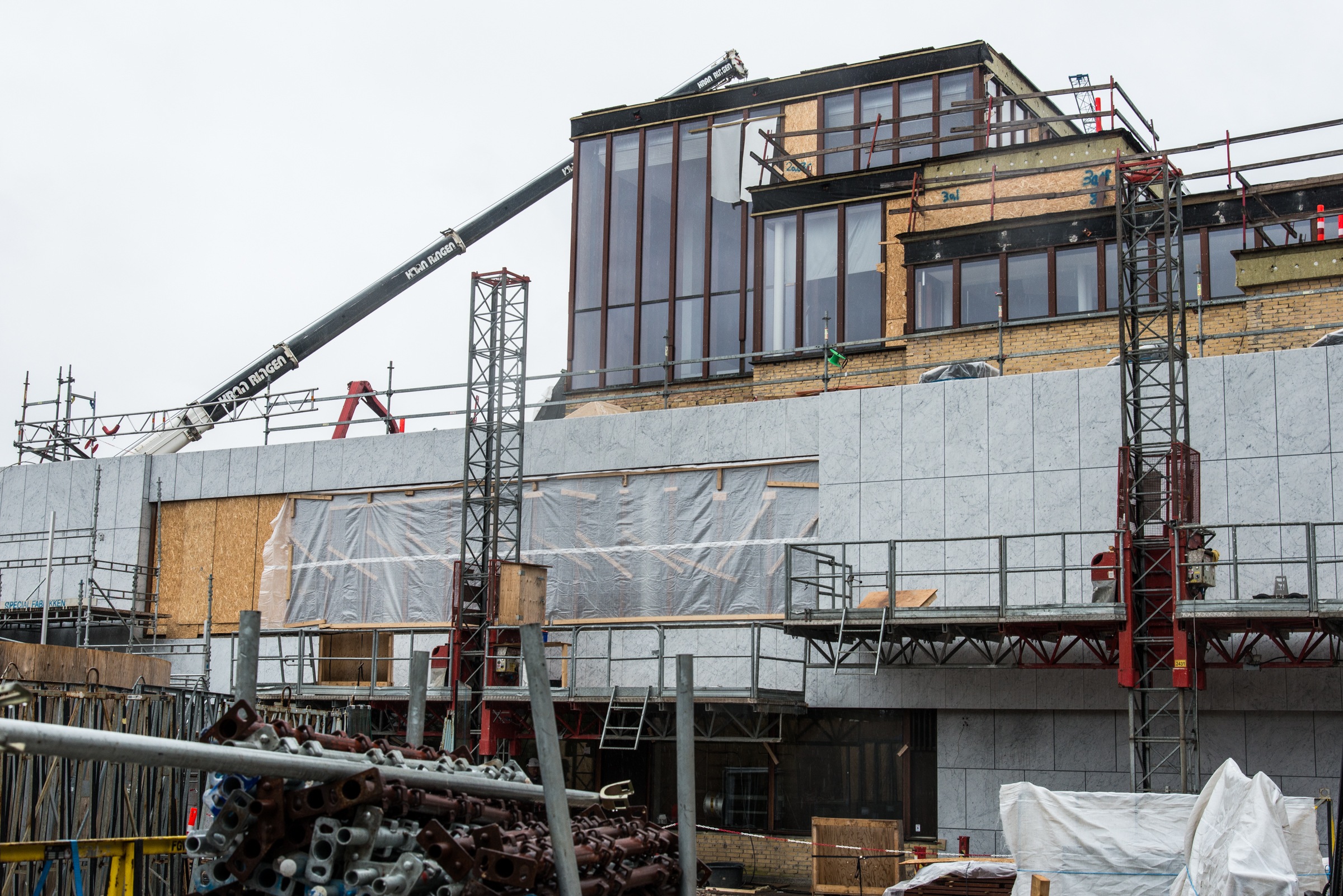
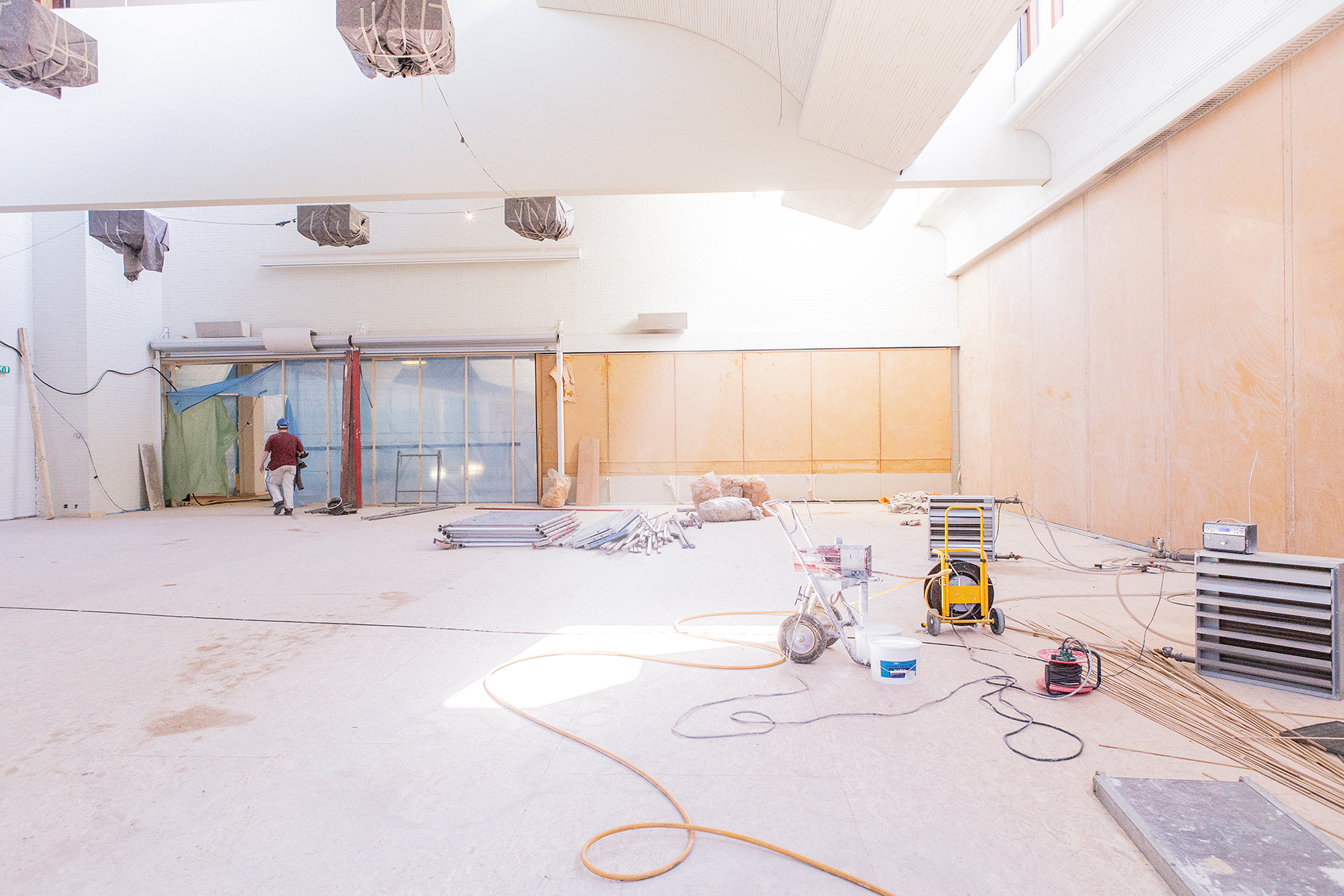
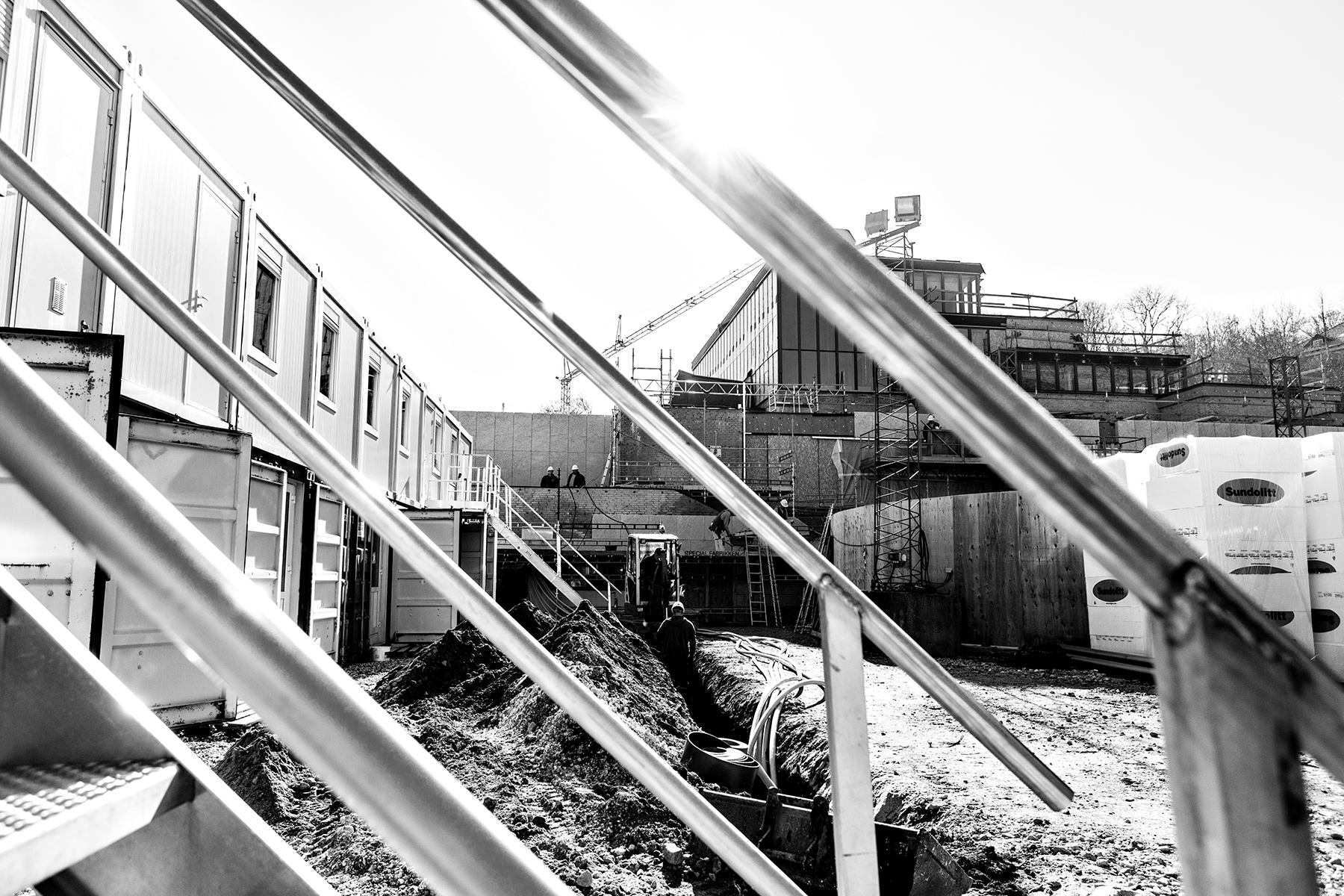
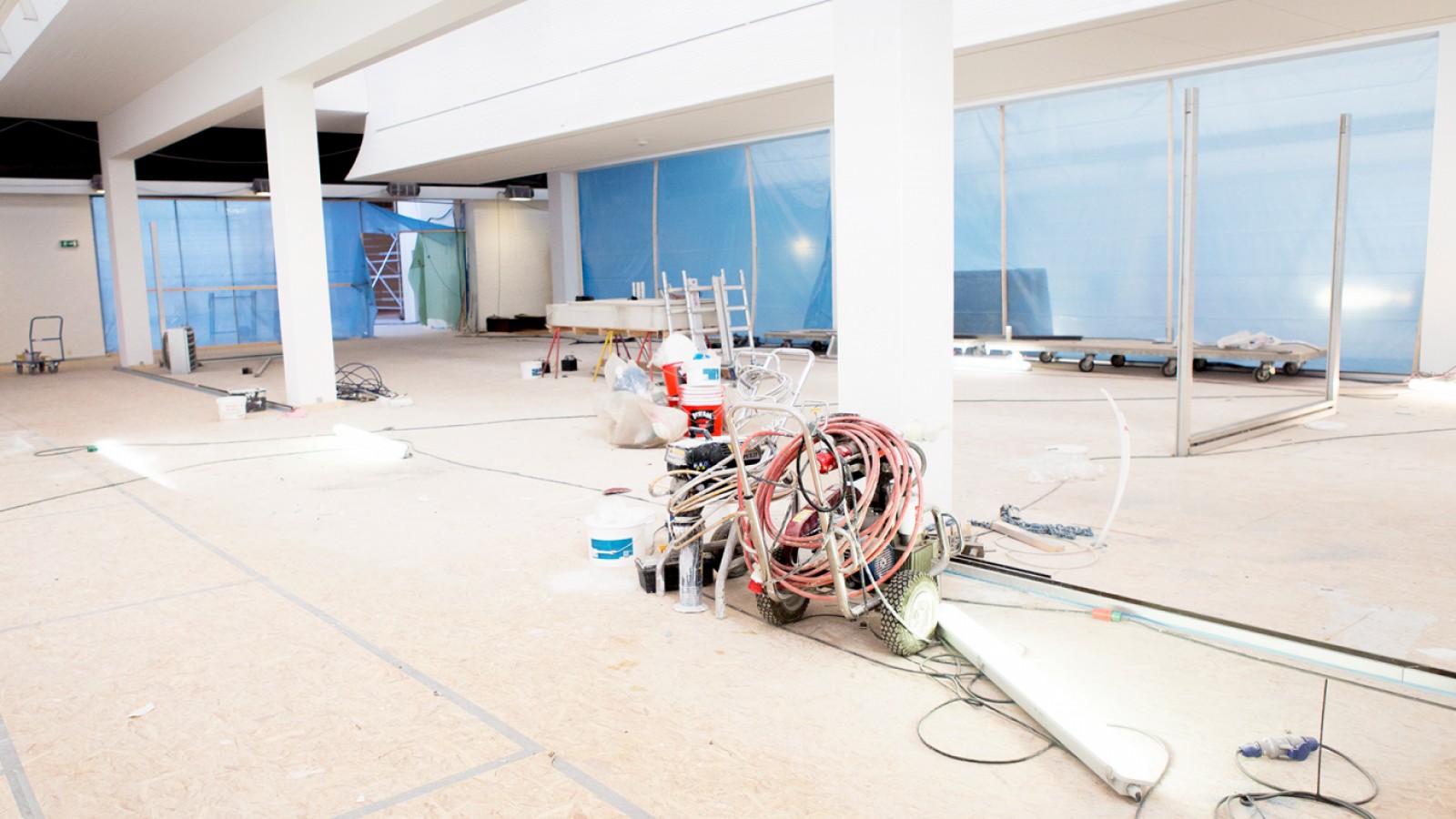
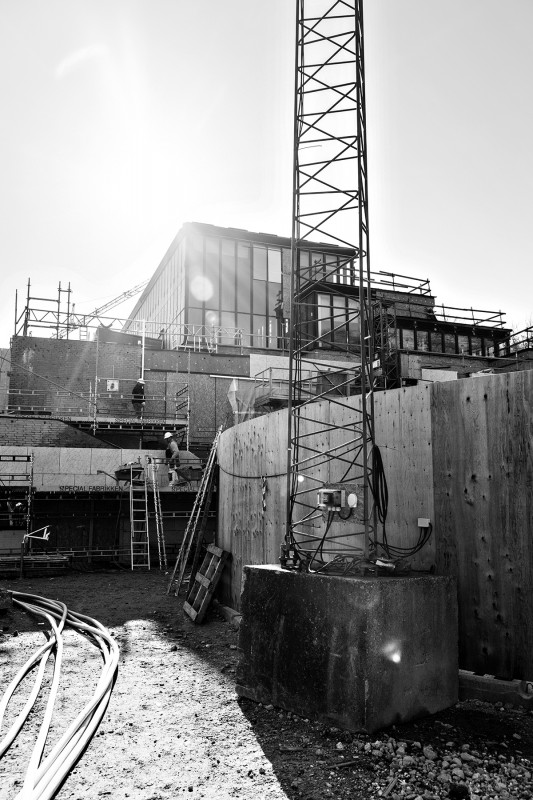
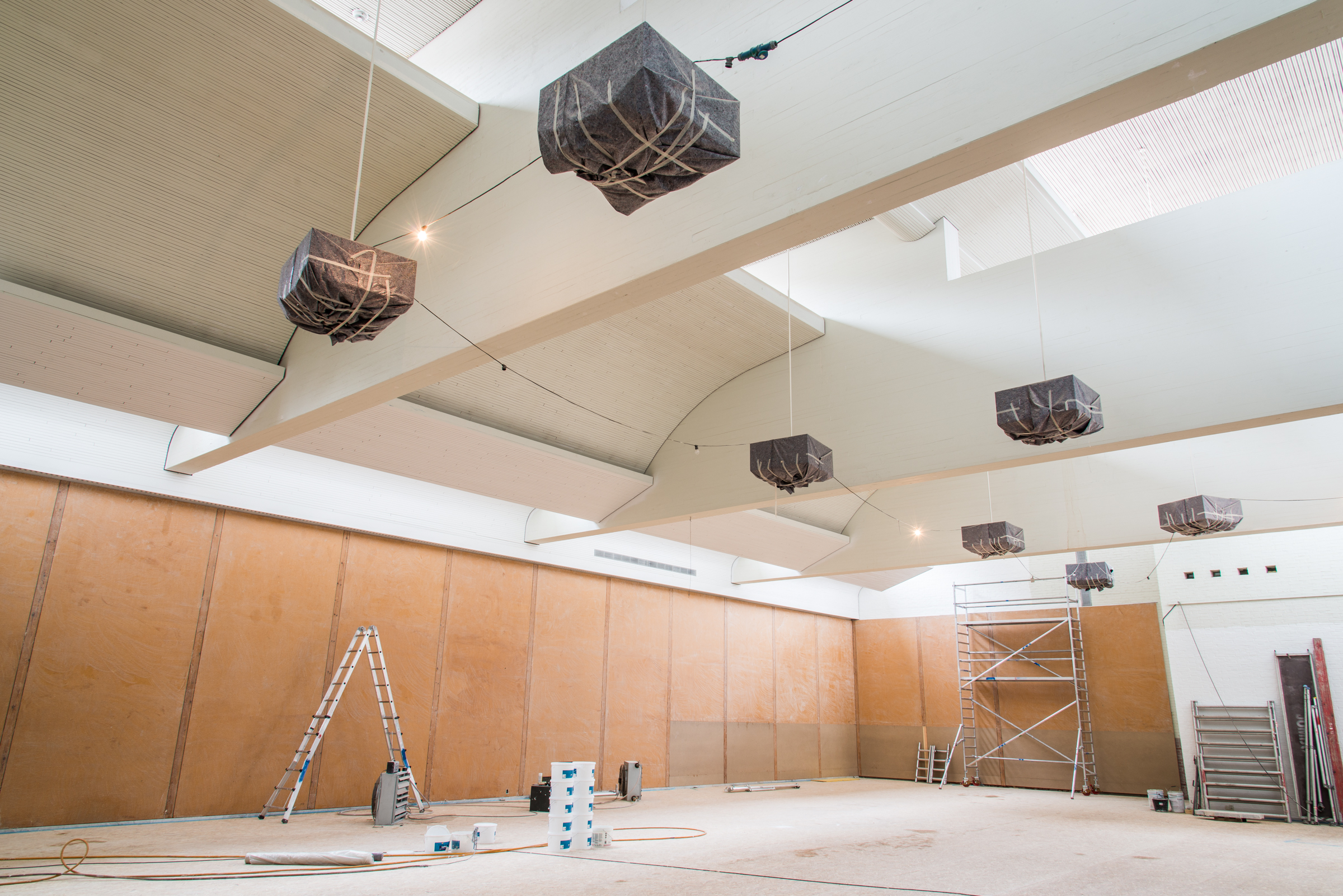
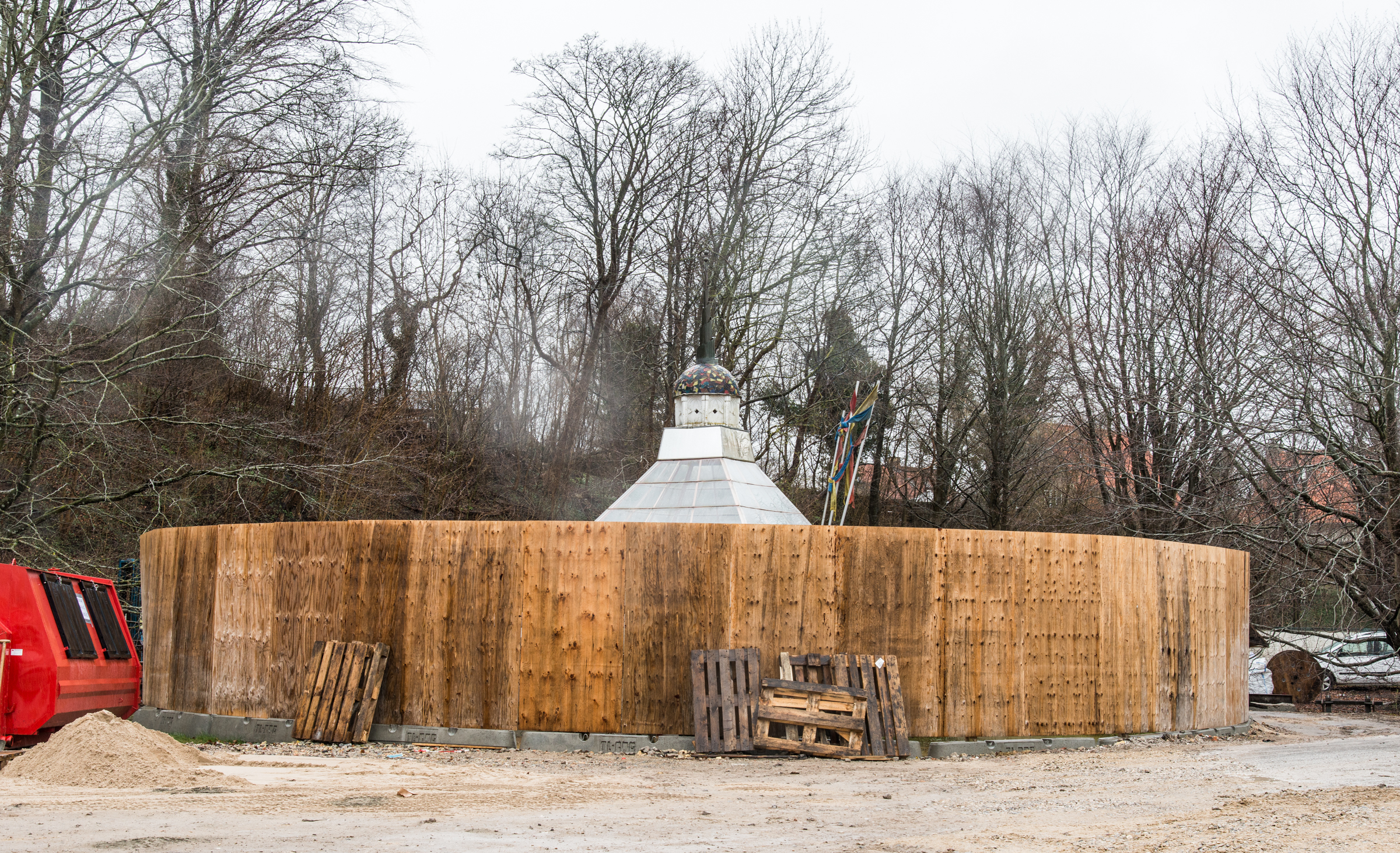
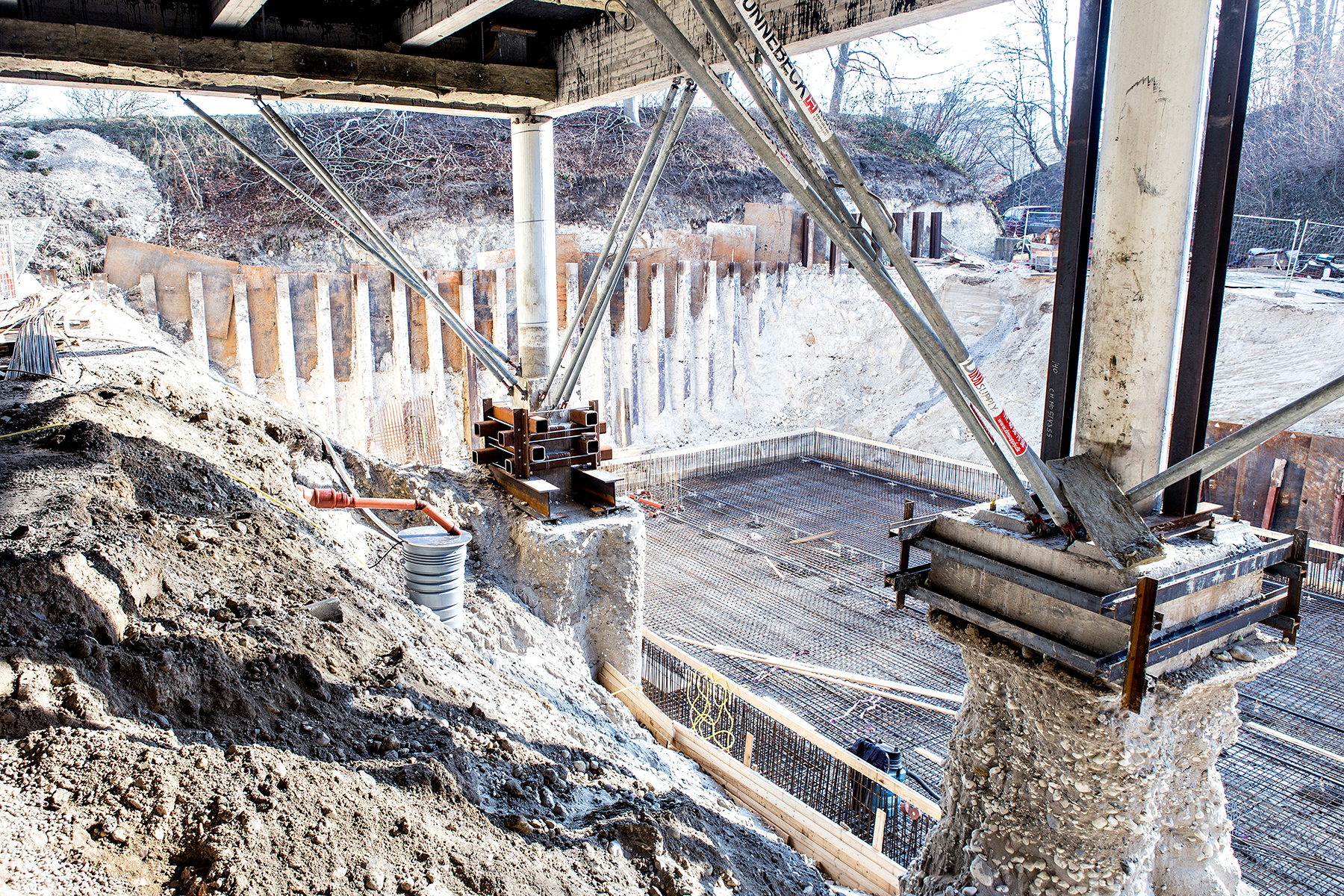
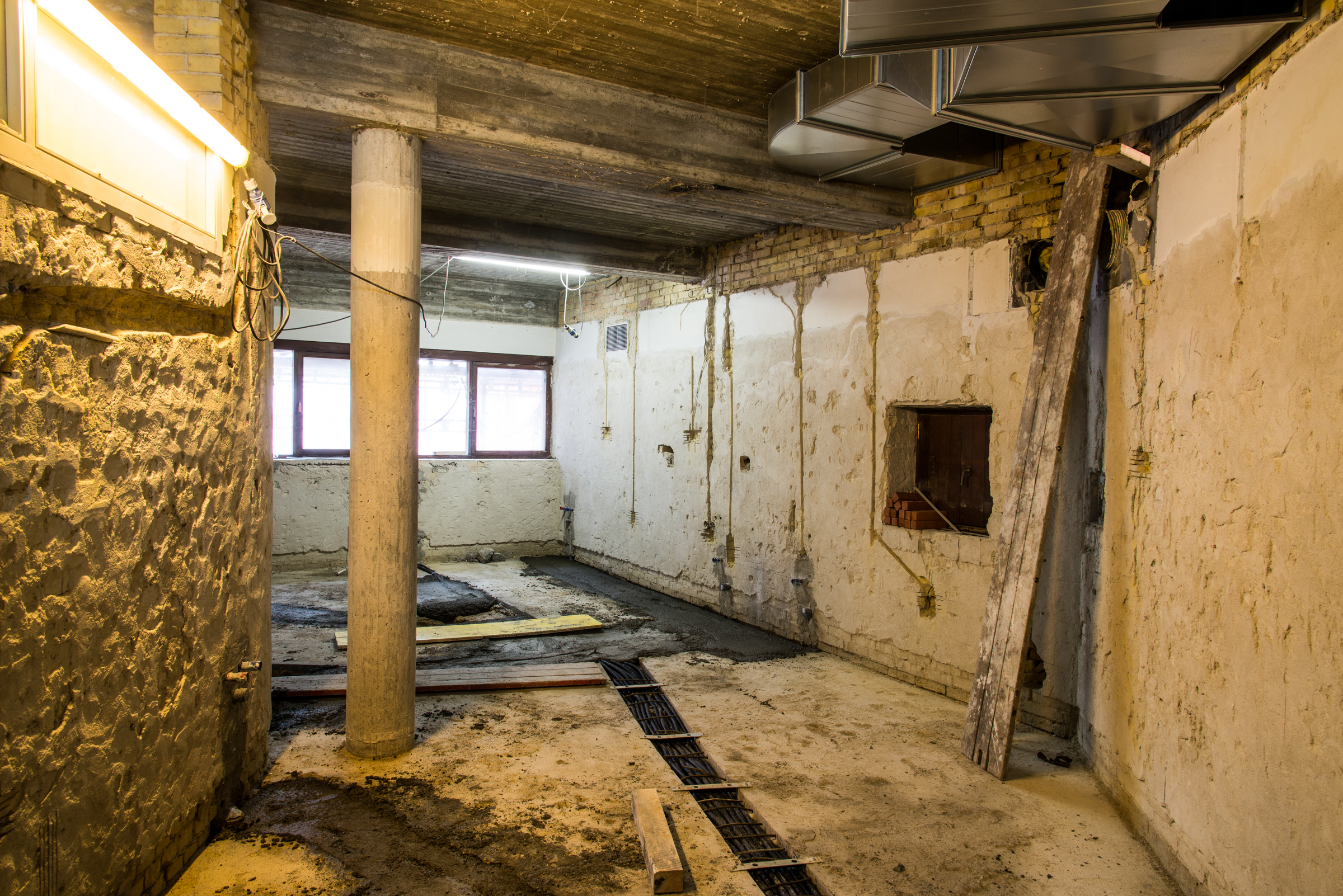
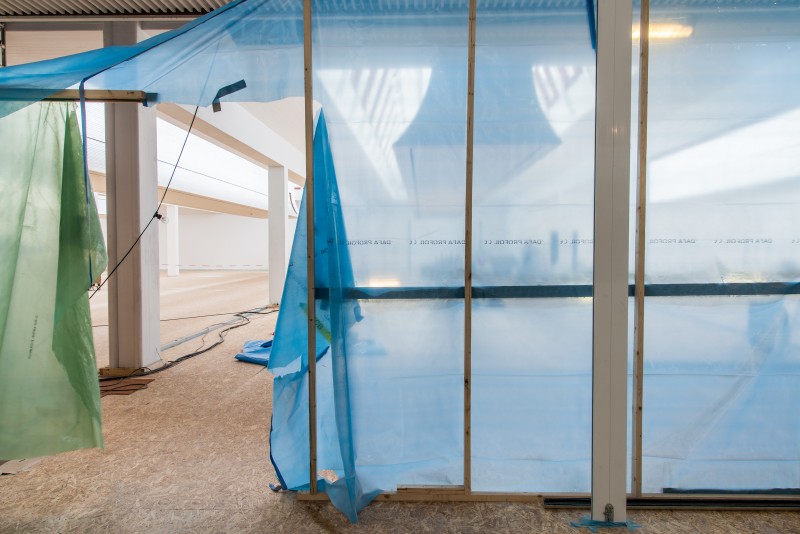
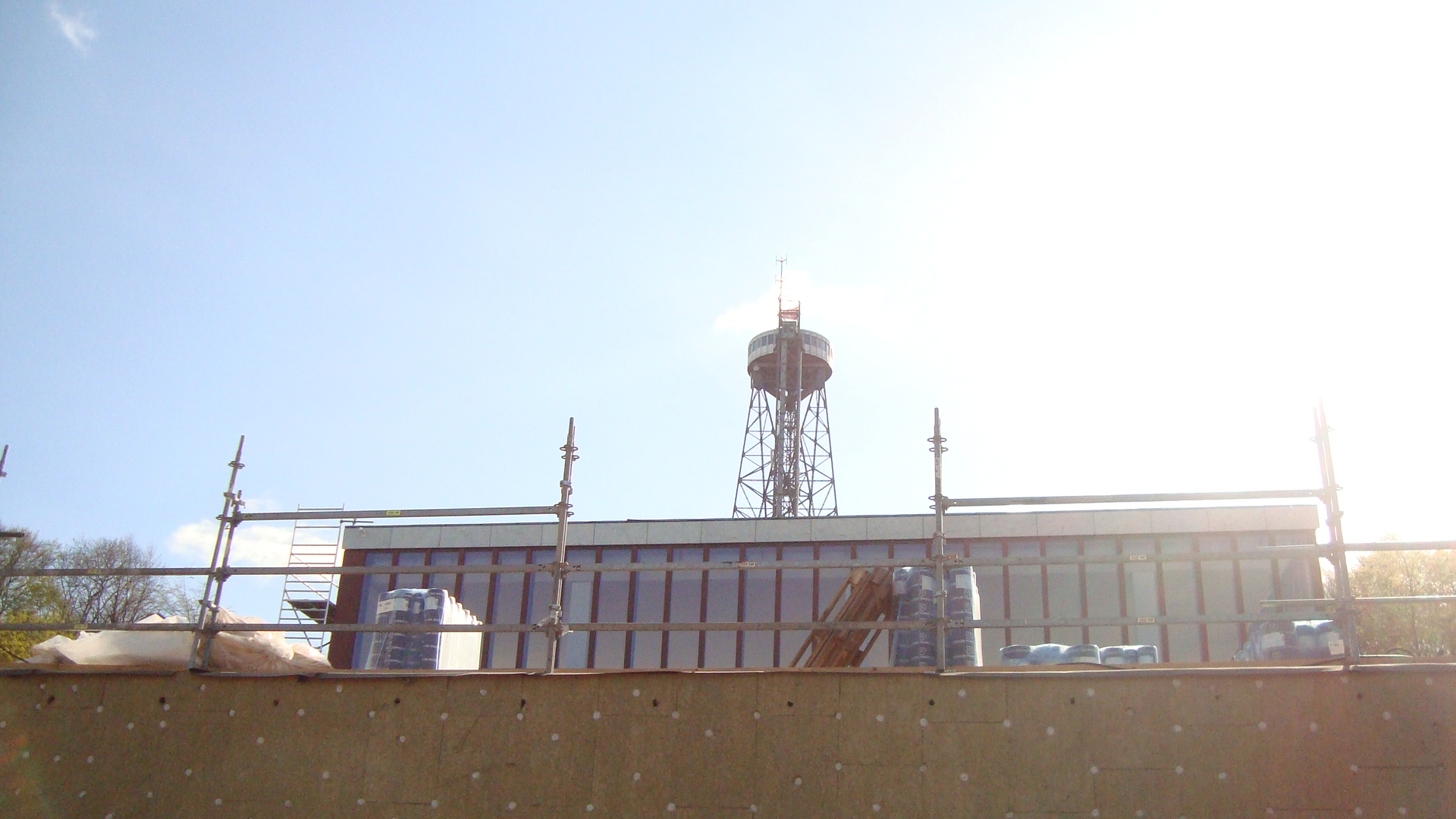
In January 2016 Kunsten reopened after one-and-a-half year’s extensive restoration. As a result, the Museum is a complete, new and improved version of itself.
Even back in 1972 Alvar Aalto and Jean Jacques Baruël’s work in Aalborg was ahead of its time. The conception of the building was modern with an integrated cafeteria, an auditorium, a large sculpture park with an amphitheatre and moveable walls in flexible exhibition spaces. At the time it was revolutionary and populist, a clear indication that art should not only be for certain people, but for everyone. Whereas previously it was only the middle and upper classes that visited museums, the new Museum paved the way for more, and different types of visitors.
Visitors Have New Needs
However, 40 years after the opening the Museum building had become rather tired and sad to look at and spend time in! Visitors, their needs and their approach to museum going had evolved. The new audience wanted holistic experiences. These included a desire for teaching workshops, more facilities for families visiting at weekends, a more accessible café and a more up-to-date shop. In addition to structural restoration, there was a need for technical upgrading and a number of new measures to equip the building for its role as a museum for the 21st century.
Architectural Competition
In 2013 a master plan was devised and the Museum organised an architecture competition, which was won by Erik Møller Arkitekter in partnership with the architectural firm, TRANSFORM, the advisory engineering company, Søren Jensen and GHB Landskabsarkitekter. The goal of the architects was to interpret Kunsten for today’s visitors and to make the Museum special again. Construction work started in 2014 and the newly renovated Museum was ready for use in January 2016.
Comprehensive Restoration
The restoration and revitalisation of Kunsten involved: the construction of a new, blacked-out exhibition space that can be lit and arranged according to requirements; workshops; new education rooms; new toilet facilities; a new café and shop; a totally renovated sculpture park with a large, new terrace; and the replacement of 317 tons of Italian marble both inside and out. The building also acquired a new, cohesive office area, a new, climate-controlled Museum store and a huge number of functional and security-related upgrades.
Greater Security and Better Flow
As a result of the restoration Kunsten has been awarded the highest, international-standard, security classification. This means that the Museum can now attract works from far more Museums throughout the world, even exhibitions that demand the highest level of security.
The restoration has also created a better flow in the Museum. The establishment of the New Gallery has made it easier for visitors to find their way around the Museum. For one thing, there is now easy access to the café and back to the exhibitions via the two stairways. In the Sky-lit Galleries, the new layout and the hanging of the permanent exhibition, Let’s Get Lost have made a positive contribution when it comes to the number of works that can be seen at the same time, and the wide-ranging, mixed forms of expression in the exhibitions. The small, intimate spaces in the Let’s Get Lost exhibition make it much easier for visitors to converse about their experiences, while the small sensory and break rooms help make the exhibitions more accessible – for children too.
New Zest for Kunsten
Overall, the restoration and revitalisation of the Museum have injected new zest and spark into Alvar Aalto’s ‘temple of art’. The building has again become an attraction in its own right and has been reinstated as a cultural landmark in northern Denmark.
The Restoration in a Nutshell
- Establishment of a new 600-m2 exhibition space – The New Gallery
- Creation of a workshop spaces for children/teaching
- Establishment of a consolidated administrative department
- New entrance area
- New shop facing Kong Christians Allé
- New underground store for artworks
- Installation of a lift for visitors
- New and restored toilets
- Restoration of the café
- Restoration of roofs and windows
- Replacement of the marble on large areas of the building’s exterior
- Establishment of energy-saving ventilation and climate facilities, and new electrical installation
Finance
The restoration and revitalisation of Kunsten was realised with support from A.P. Møller & Hustru Chastine Mc-Kinney Møllers Fond, the Obel Family Foundation, Købmand Ferdinand Sallings Mindefond and Købmand Herman Sallings Fond, and Aalborg Municipality.