Late Picasso: Comprehensive exhibition celebrating one of the greatest masters of 20th century modernism
Visit Kunsten Museum of Modern Art Aalborg and see Late Picasso – the most extensive Nordic exhibition in 40 years of late works by Pablo Picasso.
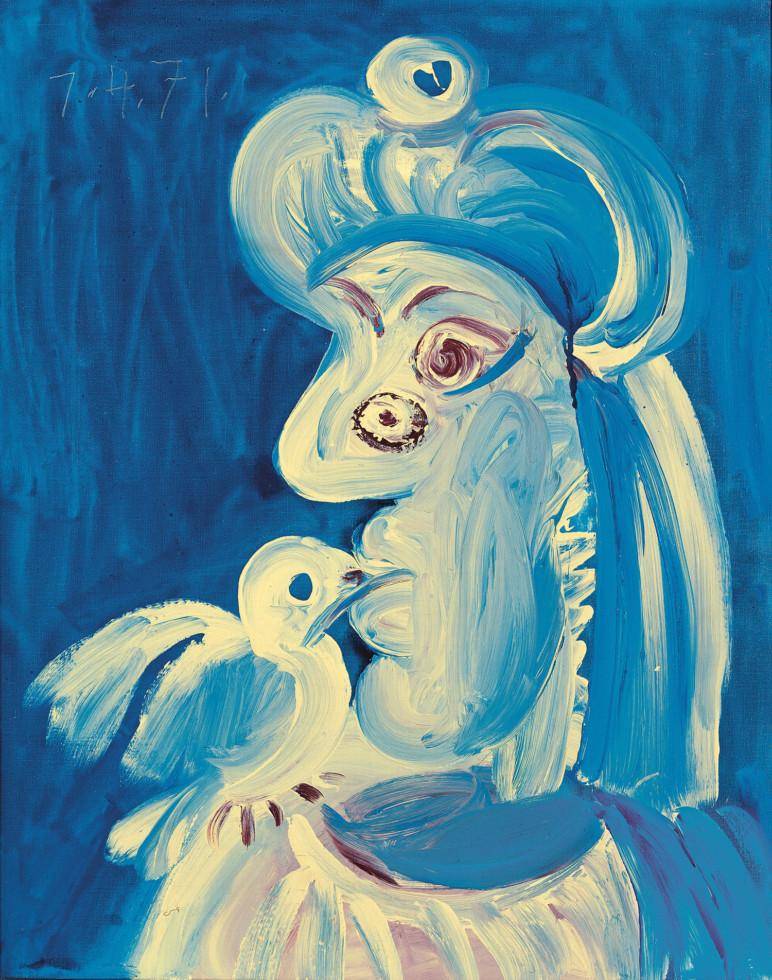
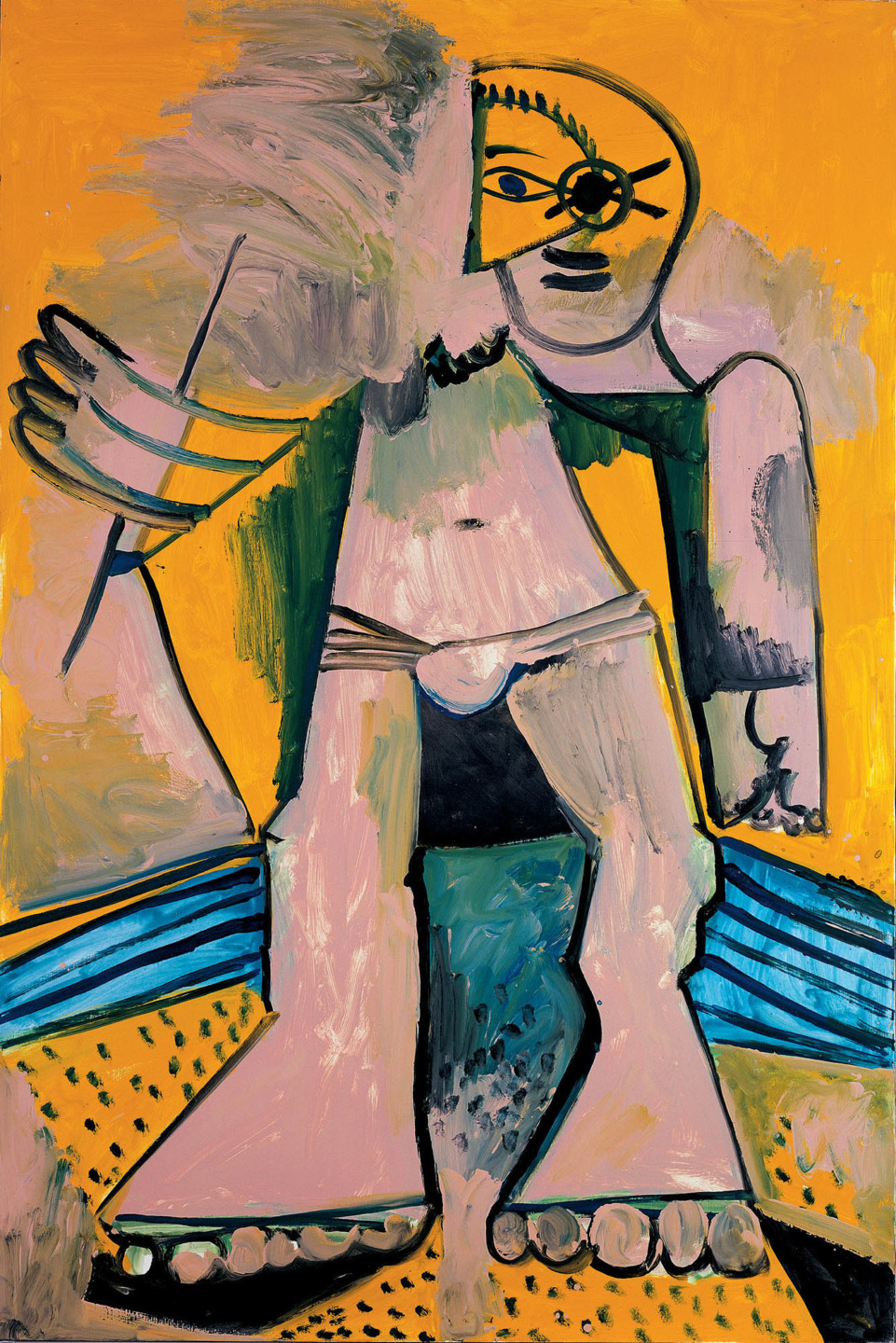
More than 60 works from the 1960s to the 1970s will provide a unique insight into the final years of Picasso’s life – a period coloured by an insatiable creative urge. In the autumn of his life, Picasso rejected every convention, revitalising his expression with an experimental, playful approach to art.
The exhibition represents a unique opportunity to get to know this part of the oeuvre of one of the most influential artists in the history of art.
The exhibition runs from May 9th to September 6th 2026.
He was more than 80 years old, but Pablo Picasso (1881-1973) created art at such a frenetic pace and with such tenacity that the result was an overwhelming collection of works. Picasso’s work from those years exudes a raw, immediate energy and an almost childlike curiosity – a freedom where anything seems possible.
“Picasso’s late works appear in many ways wilder and bolder than anything he had created before. Several pieces seem almost unfinished, with nonchalant brushstrokes and an expression that reflects both the relentless pace at which they were made and his immense creative drive. Even 50 years later, the works speak directly to us as viewers – with a vitality and intensity that is hard not to be captivated by when standing before them,” says Caroline Nymark Zachariassen, Chief Curator at Kunsten Museum of Modern Art Aalborg.
People in the Spotlight
In the early 1960s, Picasso settled in town of Mougins in the south of France. It would be his home and creative base until his death in 1973. During his years in Mougins, Picasso isolated himself more than he had ever done, dedicating virtually all his time to creating. Despite his advanced age and his status even then as one of the most influential artists in modern art, Picasso was remarkably curious about his own art and approach to creation.
Picasso revisited and reinterpreted motifs from a lifetime of experience: self-portraits, musketeers ready for action, loving couples, and models charged with sensual presence. He reflected on the big issues of life – impermanence, old age, death, vitality, desire and love – with his characteristically playful freedom and expressive power.
There is an autobiographical, psychological element common thread to these works, which also provide an insight into how, in his art, Picasso confronted his own situation as an ageing man at the end of his life.
“The human being – or the realm of human experience – is always at the center of Picasso’s work, also in terms of subject matter. Even at a time when art was moving in a more conceptual direction, he remained committed to the figurative and painterly. For him, it became a path to free experimentation, independent of the conventions of his time. At the same time, it offered the older Picasso a way to grapple with deeply existential inquiries, which can be seen in several of the works in the exhibition, where one can almost sense him confronting his own mortality,” says Caroline Nymark Zachariassen.
Late works in a new light
Even though, today, Picasso stands out as one of the most exposed and significant artists in modern history, major retrospective exhibitions have often overlooked his late works; from some quarters they have even been met with scepticism, and criticised for being unfinished or too unrestrained. Since the 1980s, when a renewed interest in painting emerged, this part of Picasso’s oeuvre has been re-evaluated. Today, we see the paintings as groundbreaking works that have also inspired many a contemporary artist.
“Picasso reminds us that we have our whole lives to renew our vision of the world and of ourselves. To see an exhibition that casts a spotlight on a special part of Picasso’s work is a unique opportunity. The exhibition will give us the chance to consider what we understand by ‘a Picasso work’. From a contemporary perspective, the late works are fresh, frank and full of devil-may-care energy. It doesn’t get more full-throttle than this,” says Lasse Andersson, Director of Kunsten Museum of Modern Art Aalborg.
The exhibition at Kunsten in Aalborg is a rare opportunity to see an unprecedentedly large selection of Picasso’s late works and to discover this part of his oeuvre.
The result of Nordic collaboration
Late Picasso is the most comprehensive exhibition in Denmark in more than 40 years to spotlight the artist’s late works. The exhibition is the result of a unique collaboration across the Nordic region: with PoMo in Trondheim and Moderna Museet in Stockholm.
The exhibition has also involved close collaboration with Fundación Almine y Bernard Ruiz-Picasso, which, together with a number of museums and private lenders, has made it possible to present a variety of Picasso’s late works in Denmark.
“An exhibition of this calibre underlines how much we can achieve through collaboration with Nordic art institutions. Currently, we are very focused on the Nordic community. By sharing works, knowledge and ambitions across the Nordic countries, we can create international-level exhibitions, which not only enhance our common cultural heritage, but also bring world art to audiences in the Nordic region and North Jutland. Kunsten also has a couple of works by Picasso in its collection. One of them is one of the very first international works purchased for the opening of the museum in 1972,” says Lasse Andersson.
The exhibition will run at Kunsten Museum of Modern Art Aalborg from 9 May to 6 September 2026.
Pablo Picasso
Born in Málaga, Spain, Pablo Picasso (1881-1973) had a huge impact on 20th-century art – an impact that extends to the present day.
In the early 20th century, he based himself in Paris, France. Here, together with Georges Braque (1882-1963), he developed Cubism – a revolutionary approach to art that challenged traditional representation of reality by breaking motifs up into geometric shapes and combining simultaneous, multiple views. Over the years, Picasso underwent several stylistic periods, including the Blue and Pink periods, and also created political works such as Guernica (1937).
In the mid-1940s he moved to the south of France, where he continued his experiments with painting, graphics, ceramics and sculpture. In 1961, Picasso moved to Mougins, a town in Provence near Cannes. This would be both his home and creative base in the final years of his life. He died in 1973.
The exhibition
The exhibition is the result of collaboration between PoMo (Trondheim), Moderna Museet (Stockholm), Kunsten Museum of Modern Art (Aalborg) and the Fundación Almine y Bernard Ruiz-Picasso. The curatorial concept was initiated and organised by PoMo, Trondheim, and curated by Dr. Dieter Buchhart and Dr. Anna Karina Hofbauer. The exhibition at Kunsten Museum of Modern Art Aalborg is curated by Caroline Nymark Zachariassen.
About Kunsten Museum of Modern Art Aalborg
Kunsten is a living art museum allowing space for immersion, wonder and fascination. The museum houses a unique collection comprising over 4000 works of art, mostly post-1900, by Danish and foreign artists. The exhibition area consists of five galleries providing visitors with ample opportunity to experience the permanent collection as well as a number of special exhibitions. Kunsten also hosts a variety of events including lectures, film screenings, concerts, family workshops, guided tours, and other activities suitable for all age groups.
The museum building, completed in 1972, is an attraction in its own right. Designed by the world-famous Finnish architect Alvar Aalto, assisted by Elissa Aalto and Jean-Jacques Baruël, it is the only museum building outside Finland designed by Aalto. The museum is built of striking white marble, a style that is continued inside with stunning marble flooring and copper lamps, also designed by Aalto.
Photos
Press photos can be found at www.kunsten.dk/presse
Presse Contact
Amalie Bejstrup, PR- and marketing manager
+45 24 62 99 93
presse@kunsten.dk
In collaboraiton with


With support from