She longed to see herself reflected in images: Now you can experience Frida Orupabo’s first solo exhibition in Denmark
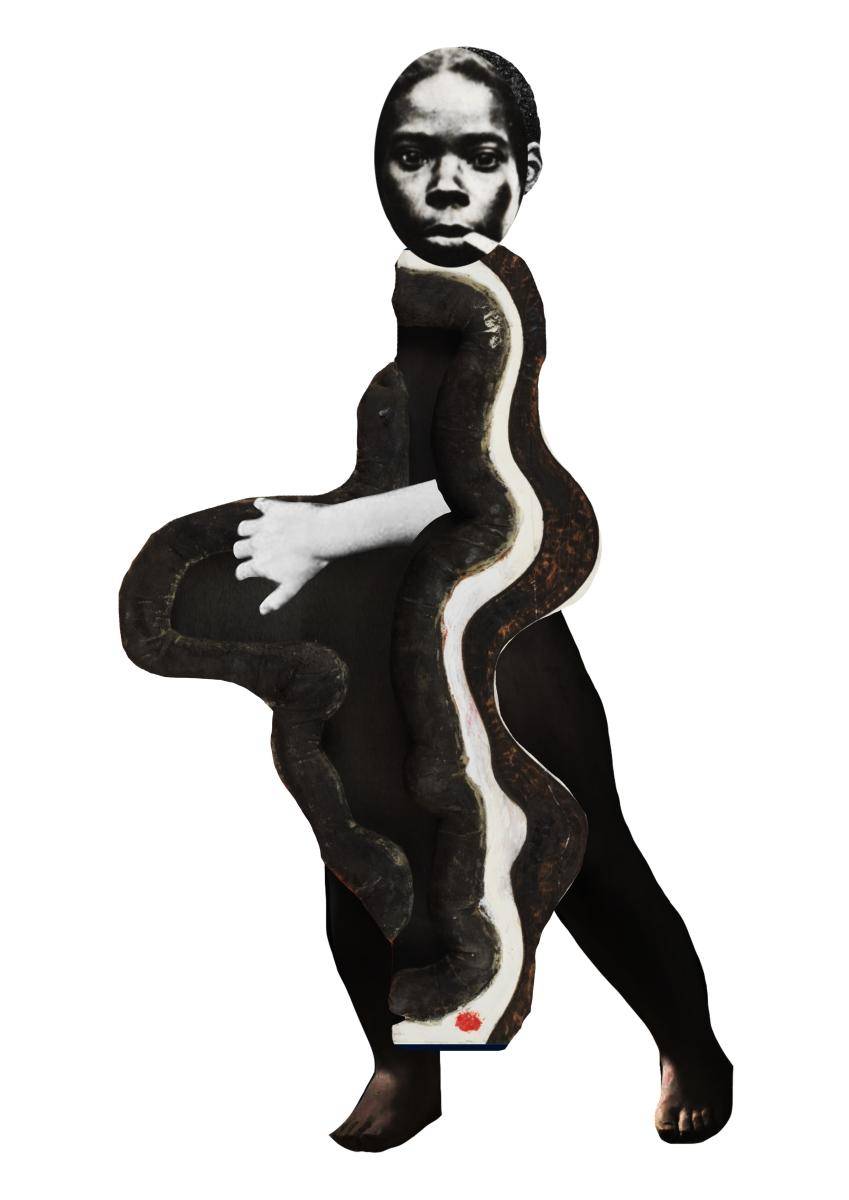
The darker corners of the internet, vintage pornography, cartoons, retro horror films and colonial archives. Frida Orupabo brings fragments from all of them together to create new images and narratives.
From October 8, audiences can experience the internationally acclaimed Norwegian-Nigerian artist’s first solo exhibition in Denmark. At Kunsten, she presents her largest installation to date in a labyrinthine exhibition architecture featuring entirely new collage works that challenge our perceptions and our position as viewers.
We visit a museum to experience art. But with Frida Orupabo, it is not necessarily so simple to determine who is looking at whom.
Orupabo (b. 1986) explores themes of race, identity, gender and class. Black women’s bodies are often at the center of her work – bodies that have historically been observed, categorized and controlled by others. Through her work, she examines who has had the power to create images of other people – and what happens when those people no longer accept the role of passive objects.
In the exhibition Get close enough and you can’t see, this encounter becomes physical. Created specifically for Alvar Aalto’s architecture, the exhibition will be Orupabo’s largest installation to date. A labyrinthine exhibition architecture draws visitors in among the works, making it impossible to take in the entire exhibition from a single vantage point – entirely in keeping with Orupabo’s work, where the fragmented, the uncontrollable and, at times, the chaotic prevail.
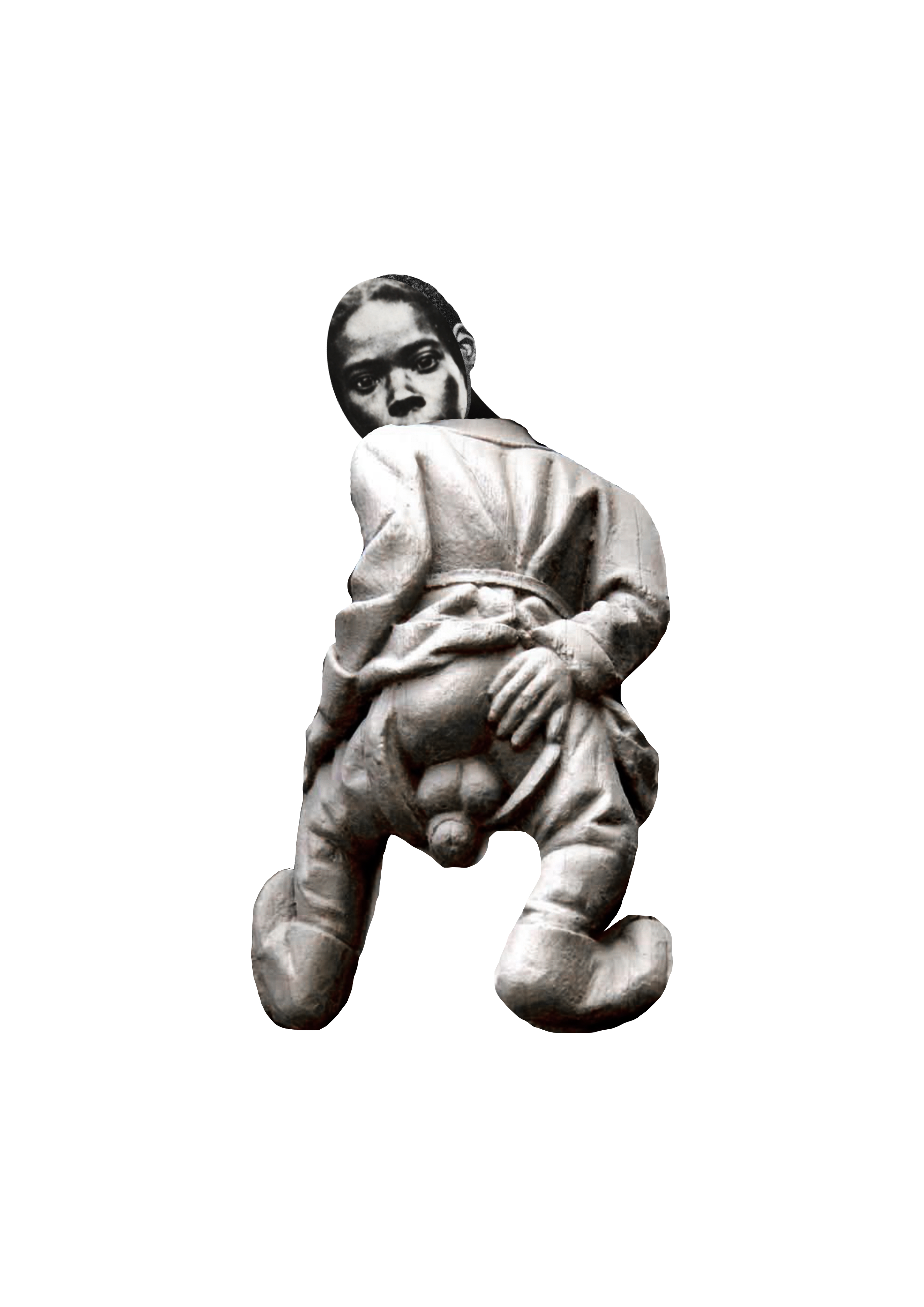
The title Get close enough and you can't see points precisely to the tension between getting close and losing sight of the bigger picture. If we get too close to a single fragment of an image, a person or a story, we risk losing sight of the whole – and with it, the nuances and diversity it contains.
“Frida Orupabo’s works are aesthetically compelling, physically present and intensely confrontational all at once. They express an underlying anger and a need to address the things we consciously or unconsciously avoid because they can be uncomfortable to confront. This applies to dark chapters in history and the traumas caused by colonialism, as well as to marginalized groups, including women of color, who take center stage in Orupabo’s work.
In the exhibition, we meet them face to face as active individuals with agency and strength, looking back at us and resisting us, while at the same time making us uncomfortably aware of our own gaze,” says Caroline Nymark Zachariassen, Chief Curator at Kunsten.
A gaze that looks back
Orupabo’s figures are constructed from material drawn from sources including historical and colonial archives, in which people of color have been photographed, documented and categorized on other people’s terms. By removing these images from their original contexts, cropping them and reassembling them, she also shifts the original power dynamic. The people who were once the objects of someone else’s gaze take on a new position. Now, they look back.
“I hope the audience will get close to the works while also becoming aware of their own position. The closer you get, the harder it becomes to maintain a distance. You are not simply looking at something – you become part of the encounter,” says Frida Orupabo about the exhibition.
She could not find herself in the images
Orupabo’s relationship with images also has roots in her own upbringing. She grew up in Norway as the daughter of a Norwegian mother and a Nigerian father, in an environment where very few people looked like her and her sister.
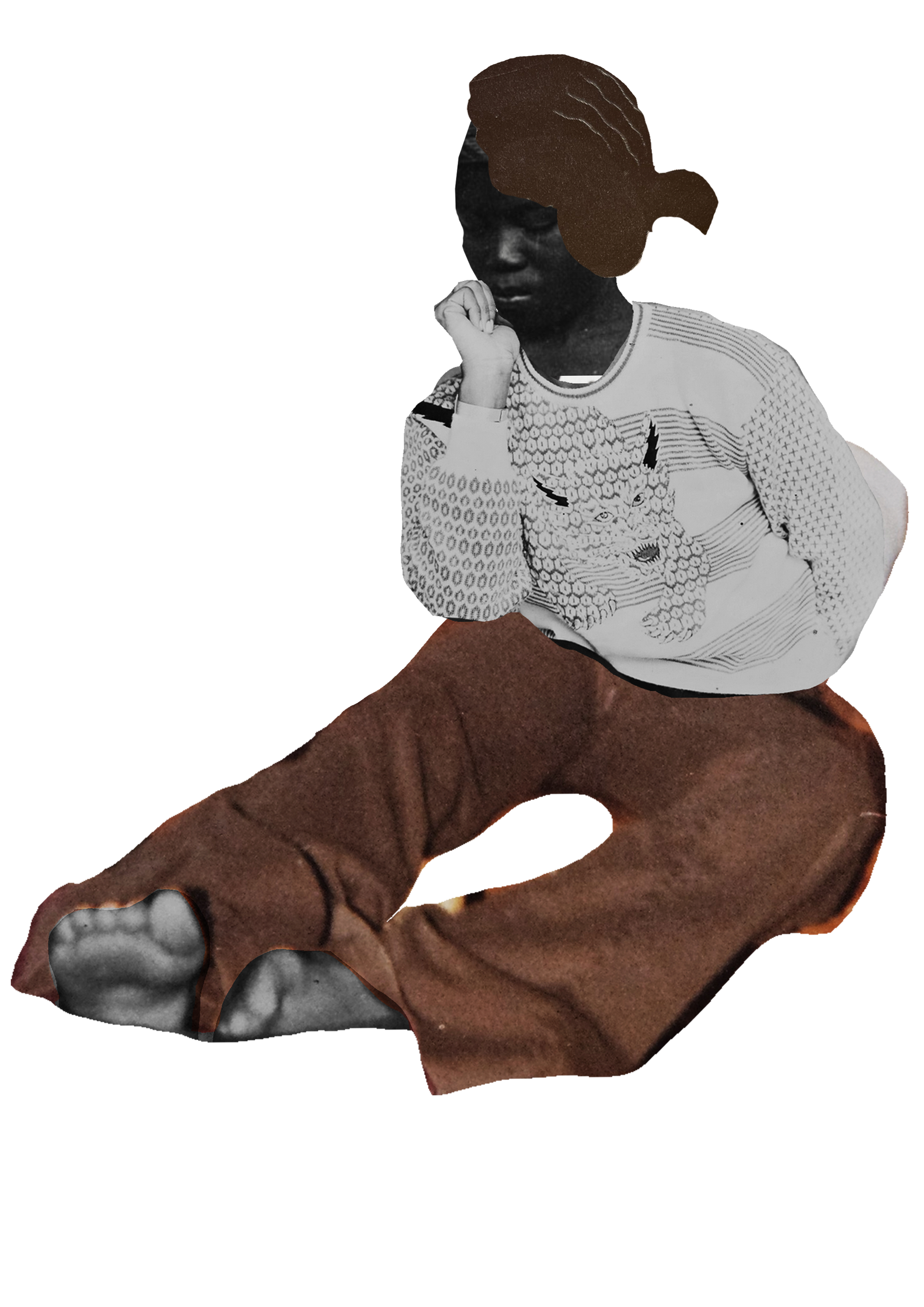
As a child, she longed for images of people who represented her. Later, she began searching for and collecting images that spoke to her own identity. The internet gave her access to an almost infinite world of images.
Orupabo herself has described this search as a kind of hunger for images of people who looked like her. She began cutting, manipulating and recombining them in new ways – creating new realities from the material she found.
In Orupabo’s work, this personal starting point intersects with broader narratives about identity, race, belonging and power.
From Instagram to the international art scene
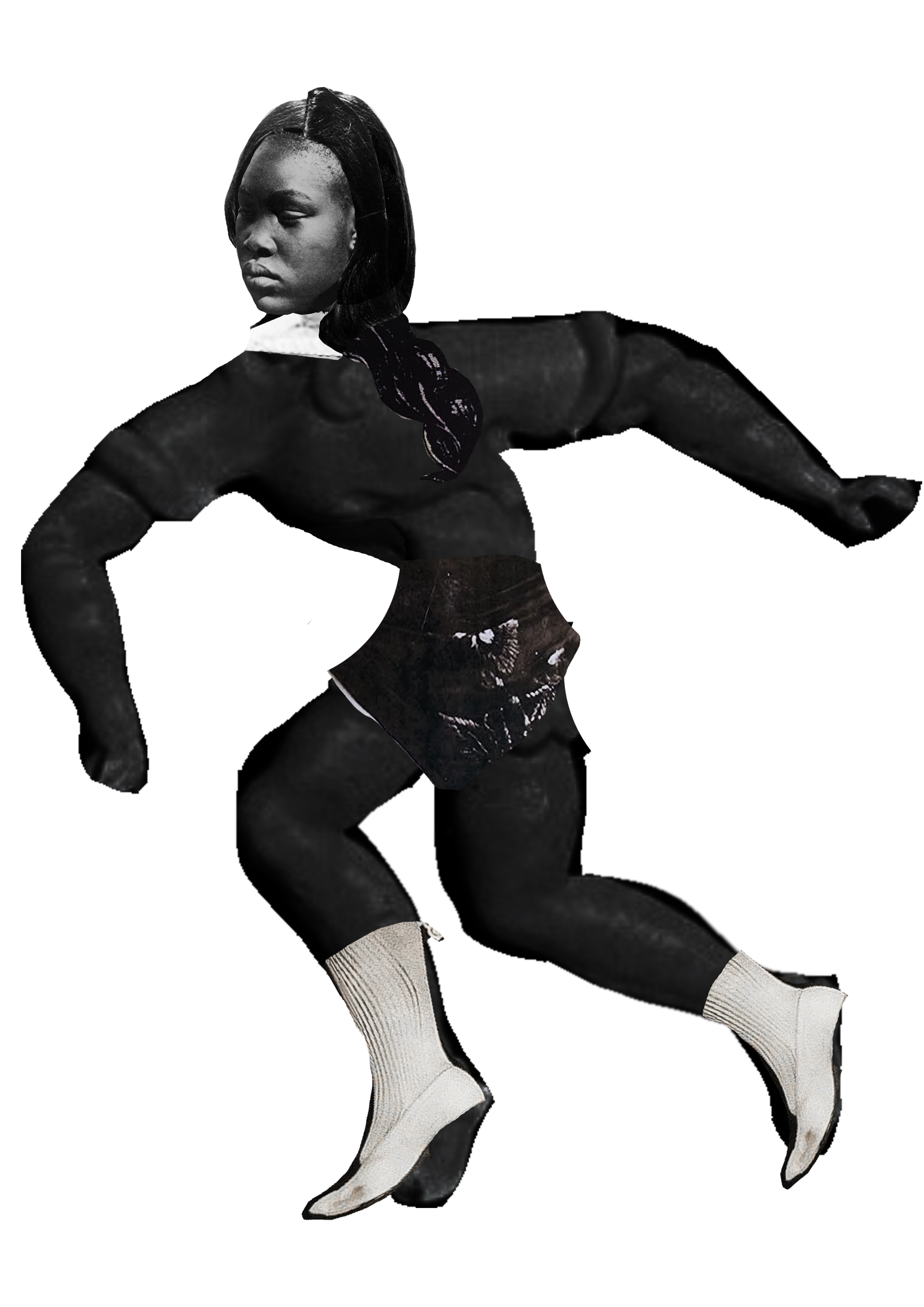
Frida Orupabo trained as a sociologist and is a self-taught artist based in Oslo. In 2013, she began sharing her digital collages on the Instagram account @nemiepepa, which functioned as a kind of digital diary and personal image archive.
In 2017, her work was discovered by American artist and filmmaker Arthur Jafa. He invited Orupabo to participate in an exhibition at Serpentine Galleries in London. This became a turning point.
Since then, her collages have moved from the screen into the exhibition space in the form of, among other things, life-sized figures, sculptures, video works and installations.
Today, Orupabo has exhibited at venues and events including the Venice Biennale, Bienal de São Paulo, Gwangju Biennale, Bonniers Konsthall, Astrup Fearnley Museet and the Los Angeles County Museum of Art. In 2025, she received the SPECTRUM International Prize for Photography for her photographic and collage-based work.
Her works are held in collections including Moderna Museet, Museum Ludwig, the National Museum in Oslo, Louisiana Museum of Modern Art and Kunsten Museum of Modern Art Aalborg.
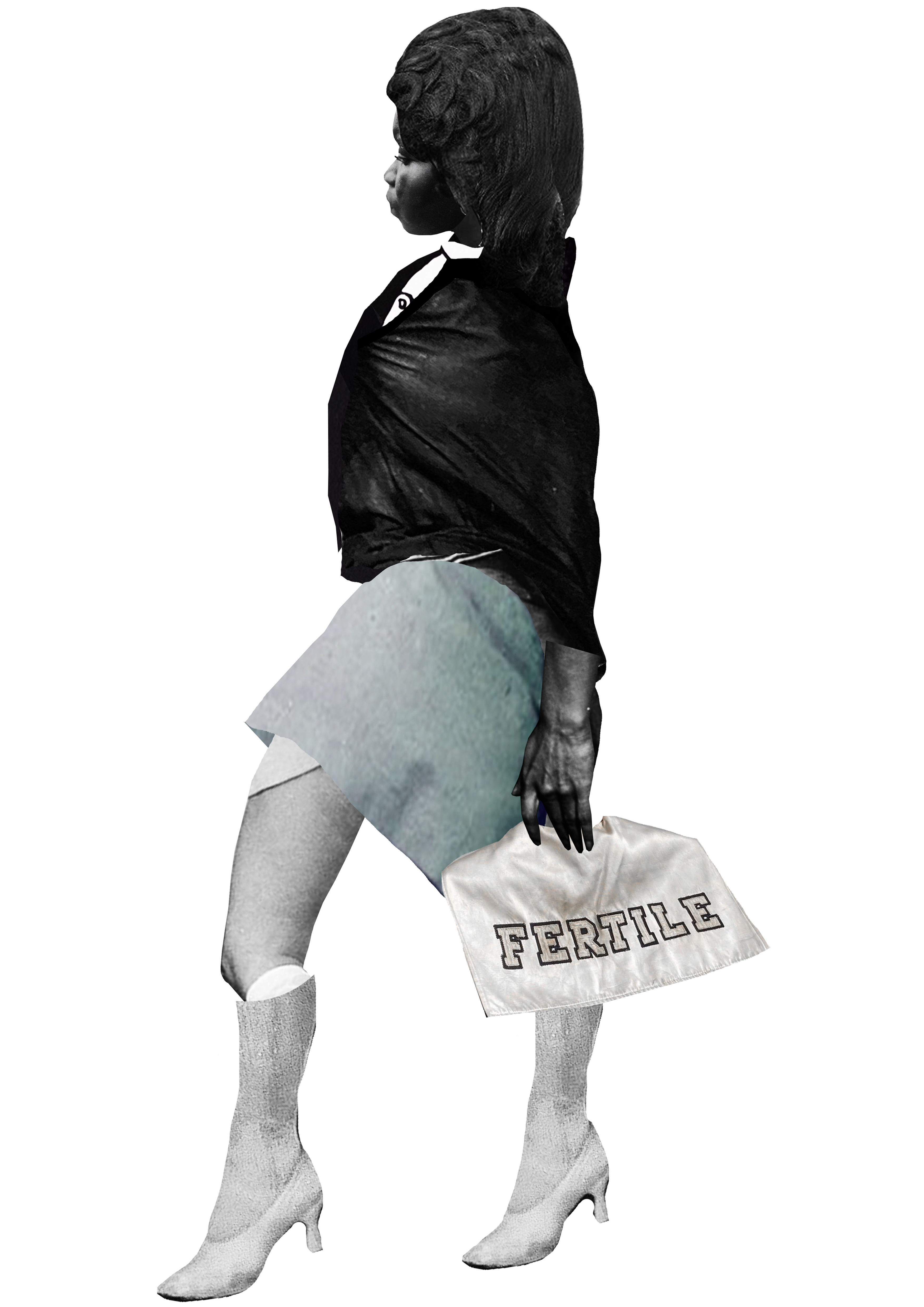
The exhibition at Kunsten also includes Sickbed II and Picnic from 2024, which are part of Kunsten’s collection and were donated to the museum by the New Carlsberg Foundation.
The exhibition is accompanied by a catalogue featuring texts by the internationally acclaimed curator Helen Molesworth and Chief Curator at Kunsten Caroline Nymark Zachariassen, as well as a conversation between Frida Orupabo and young Danish author Nana Fatou. Designed by Claus Due, the catalogue primarily features new works created specifically for the exhibition.
The exhibition is supported by the New Carlsberg Foundation, the Augustinus Foundation, the Obel Family Foundation, the Aage and Johanne Louis-Hansen Foundation, the Danish Arts Foundation, OCA, Overretssagfører L. Zeuthens Mindelegat, Kvadrat and the Beckett Foundation. As a sponsor, Kvadrat has also contributed to the realization of the exhibition by providing materials for the textile installation that runs throughout the exhibition.
Get close enough and you can't see is on view at Kunsten Museum of Modern Art Aalborg from October 8, 2026, to May 9, 2027.
Read more about the exhibition on kunsten.dk
About Kunsten Museum of Modern Art Aalborg
Kunsten is a living art museum allowing space for immersion, wonder and fascination. The museum houses a unique collection comprising over 4000 works of art, mostly post-1900, by Danish and foreign artists.
The exhibition area consists of five galleries providing visitors with ample opportunity to experience the permanent collection as well as a number of special exhibitions. Kunsten also hosts a variety of events including lectures, film screenings, concerts, family workshops, guided tours, and other activities suitable for all age groups.
The museum building, completed in 1972, is an attraction in its own right. Designed by the world-famous Finnish architect Alvar Aalto, assisted by Elissa Aalto and Jean-Jacques Baruël, it is the only museum building outside Finland designed by Aalto. The museum is built of striking white marble, a style that is continued inside with stunning marble flooring and copper lamps, also designed by Aalto.
Photos
Press photos are available at kunsten.dk/press
Press contact
Amalie Bejstrup, PR Manager
+45 24 62 99 93
ab@utzoncenter.dk
With support from